

Envisioning the Future with Intelligence, Cultivating Skilled Talent through Innovation: Finals of the Vocational Education Track of the 8th Global Competition on Design for Future Education Held in Fuzhou
From December 20 to 21, 2025, the Finals of the Vocational Education Track of the 8th Global Competition on Design for Future Education were held at Fuzhou Software Technology Vocational College. Jointly organized by Beijing Normal University and the UNESCO Institute for Information Technologies in Education (UNESCO IITE), the competition is one of the flagship annual activities of the World Digital Education Alliance. The Finals brought together 26 student teams from higher vocational institutions across multiple provinces and municipalities in China, as well as from Indonesia. Focusing on the deep integration of vocational education with cutting-edge technologies such as artificial intelligence, the participating teams presented a series of innovative solutions addressing real-world scenarios, including the digital preservation of intangible cultural heritage, special education, and industrial upgrading.
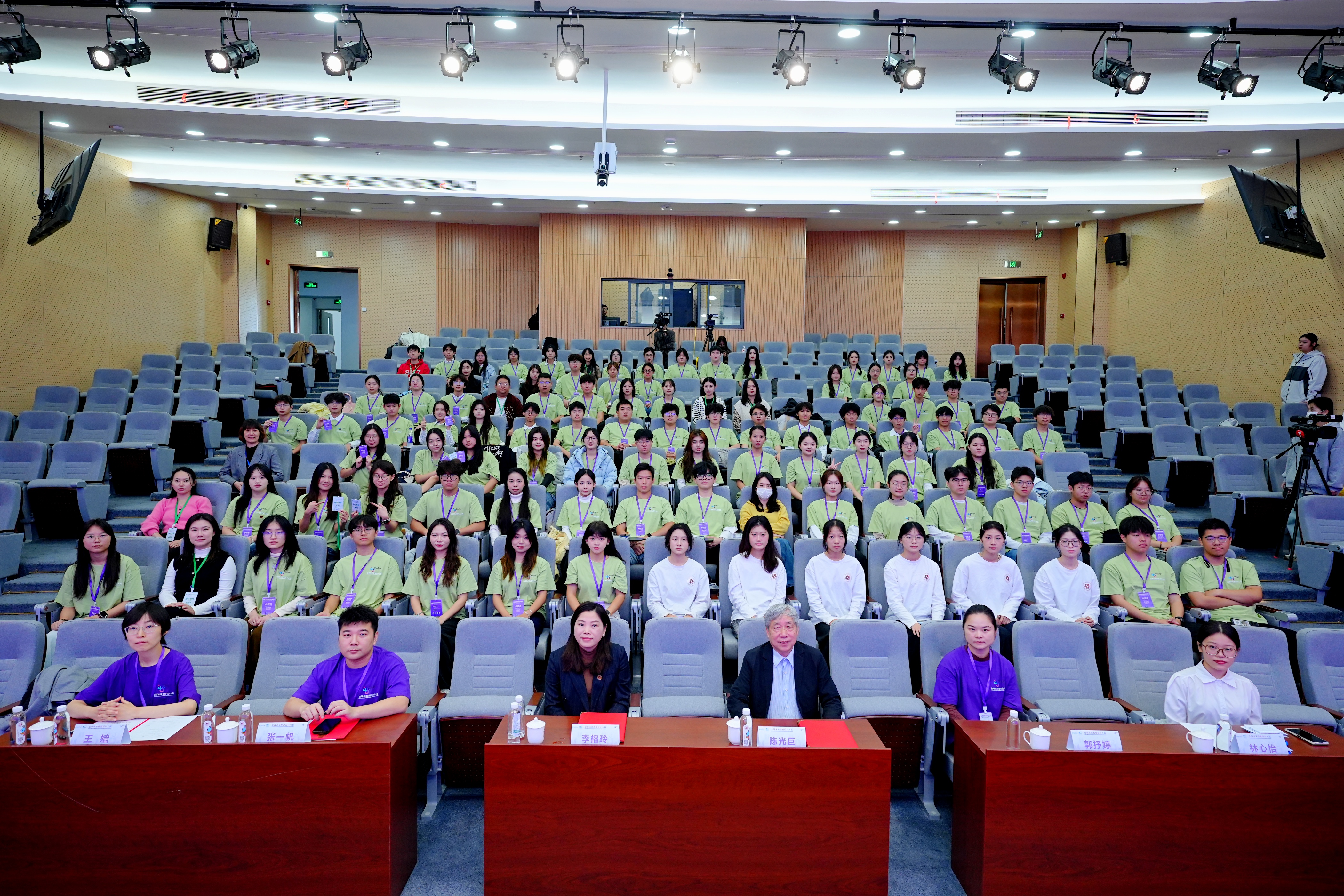
Group photo of the Finals of the Vocational Education Track
Expert Perspectives: Advancing Vocational Education Reform through Design Thinking to Cultivate “Digital Craftsmen”
Professor Chen Guangju, Chair of the Competition Steering Committee and Vice Dean of the Smart Learning Institute of Beijing Normal University, emphasized that design-driven approaches are essential to educational innovation, while technology serves as a key driver of future transformation. In the context of accelerating digitalization in education, he noted that higher education institutions should continue to promote the integration of technology and education to cultivate interdisciplinary, future-ready talent. He highlighted that the Vocational Education Track, supported by digital resources provided by partner institutions and enterprises, offered participating teams a robust platform for innovative practice. Commending the teams for their exploration of integrating artificial intelligence, digital twins, and other advanced technologies into educational design, Professor Chen encouraged young participants to empower education through technology and design, contributing to a more innovative and inclusive global education landscape.
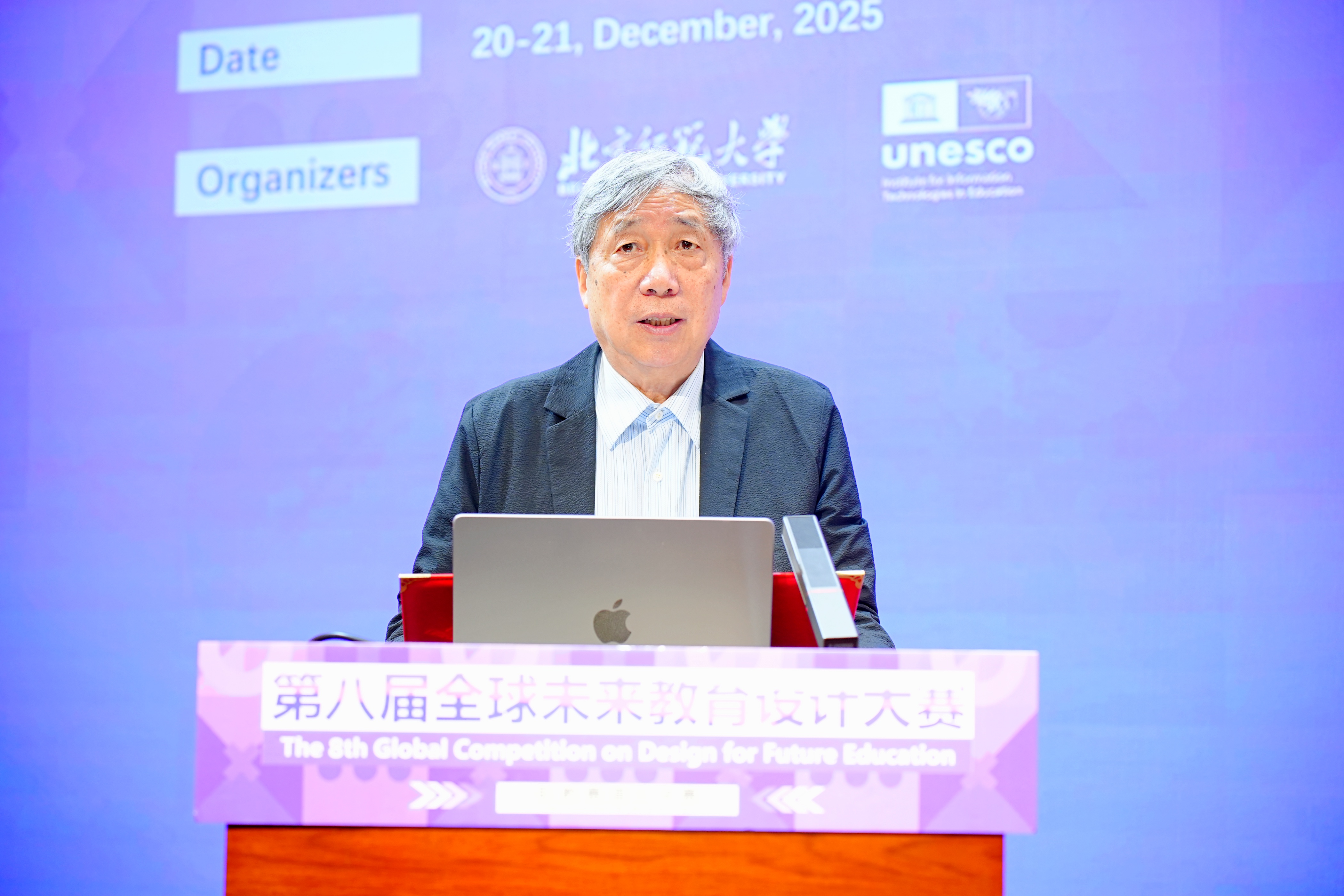
Address by Professor Chen Guangju
Prof. Li Rongling, Assistant to the President of Fuzhou Software Technology Vocational College, stated that the competition centers on “innovating educational models and empowering future development,” and is committed to building a global exchange platform for education innovators. She noted that the college upholds a philosophy of “digital foundations with a design-oriented approach,” continuously advancing the integration of industry and education. She expressed hopes that the competition would serve as an opportunity to jointly explore pathways for the development of vocational education in the digital era. She encouraged participating teams to actively showcase their achievements in areas such as technology empowerment, industry–education collaboration, and personalized talent cultivation, working together to promote an open, shared, and digitally driven ecosystem for future education.
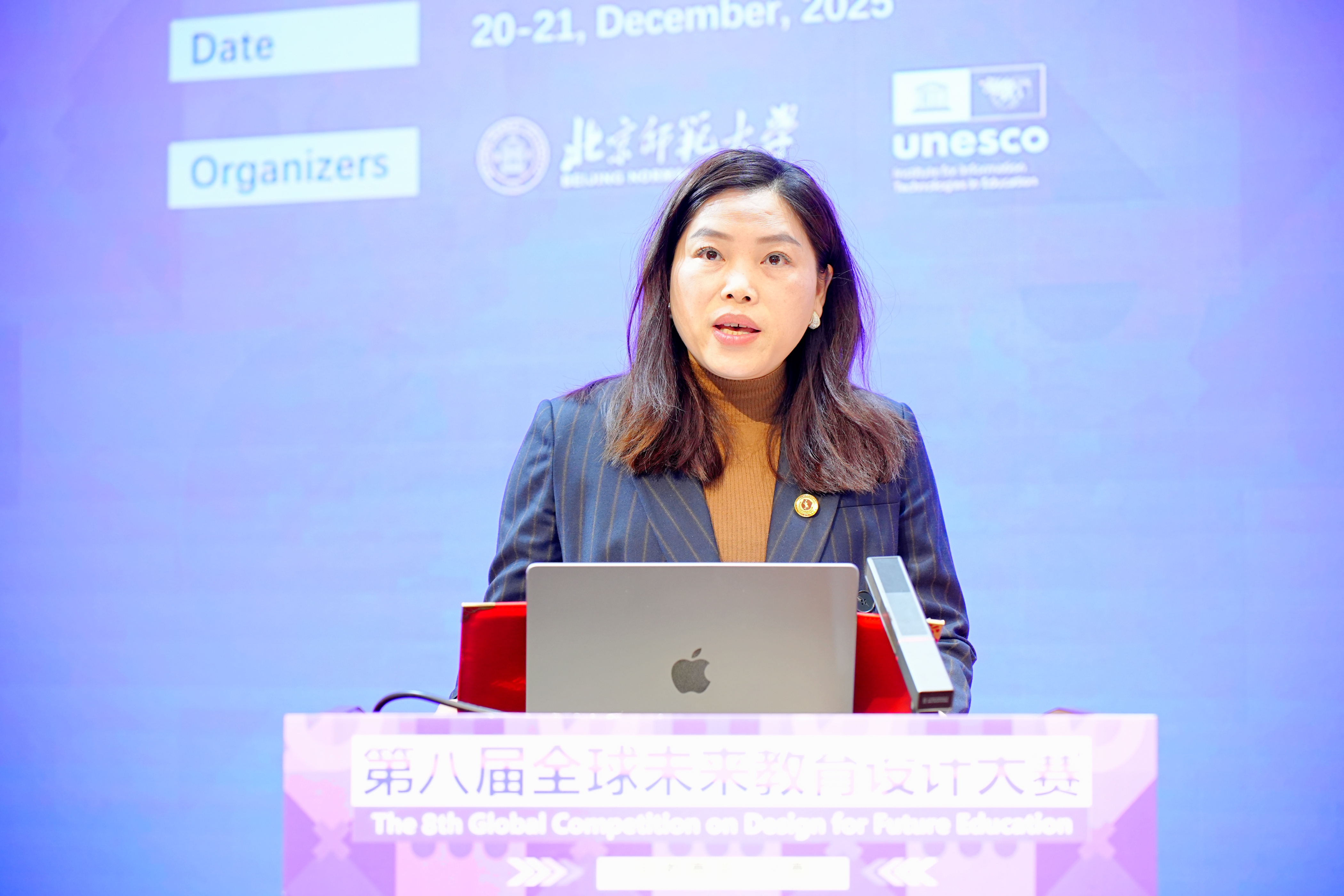
Address by Professor Li Rongling
Frontier Experiences: AI Applications Inspire New Reflections on Education
During the competition, a range of immersive experience activities was organized, highlighting frontier practices at the intersection of artificial intelligence and digital education. The opening “Human–AI Debate” attracted wide attention. Centered on the timely educational question of whether schools should encourage students to openly use AI in writing, student participants engaged in real-time exchanges with an artificial intelligence system. Through live interaction, participants directly experienced AI’s strengths in argument structuring, language generation, and rapid response, while also prompting deeper reflection on human agency and the role of humanistic values in the application of emerging technologies.

Human–AI Debate
Participating teams also visited several distinctive teaching and practice spaces at Fuzhou Software Technology Vocational College, gaining first-hand insight into the development of its digital learning environments. Leveraging NetDragon’s strengths in technology, talent, and industry resources, the college has established a new teaching model characterized by the integration of virtual and physical spaces and driven by intelligent technologies. Through immersive experiences and on-site observation, faculty and students further explored innovative applications of emerging technologies in classroom instruction, ideological and civic education, and campus cultural exhibitions, providing more concrete application perspectives and design inspiration for educational innovation and project development.
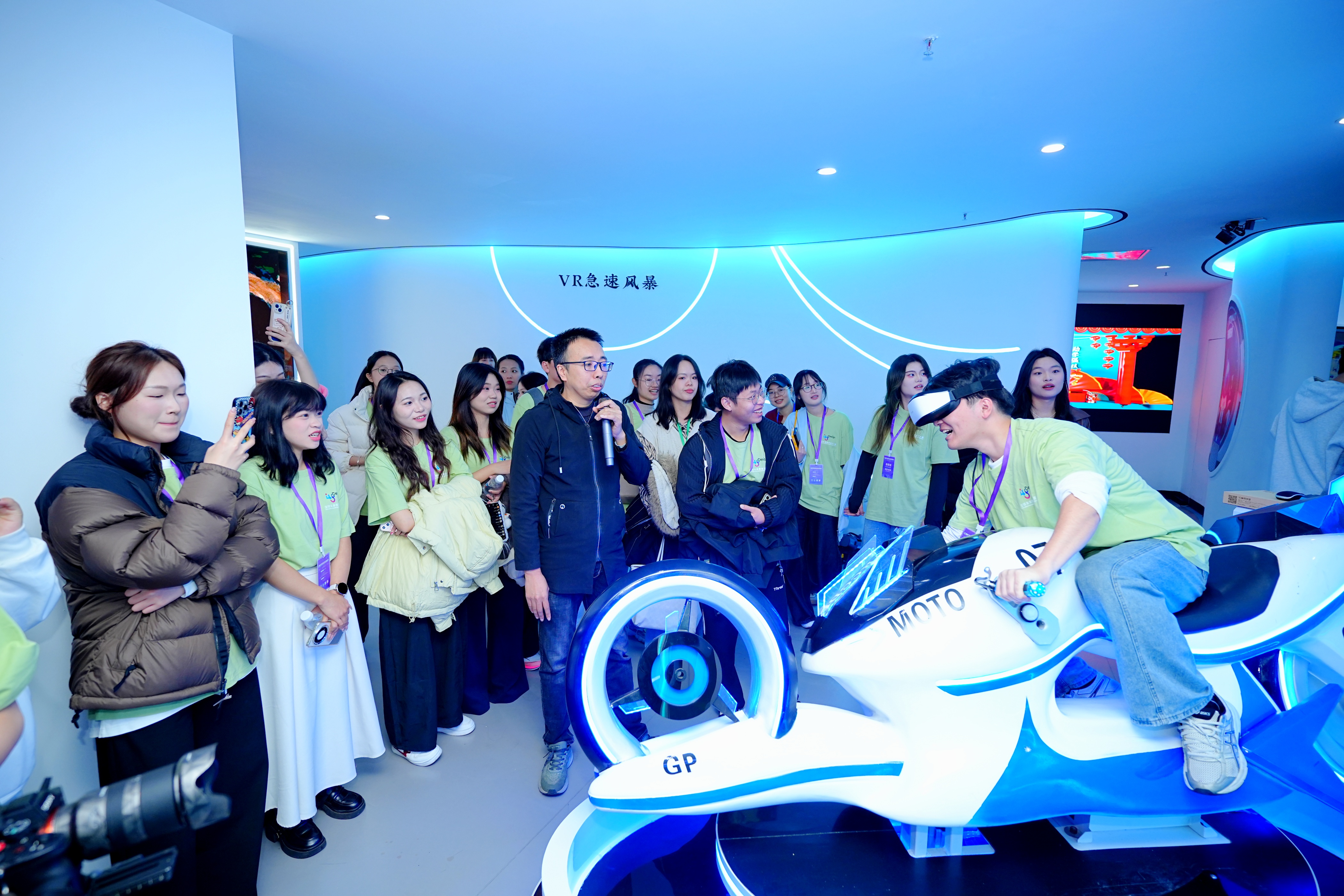
Visit to Signature Teaching Facilities at Fuzhou Software Technology Vocational College
Collaborative Co-Creation: Youth-Led Solutions Address Global Challenges
With guidance from mentors and through collaborative design processes, domestic and international student teams from higher vocational institutions carried out multiple rounds of refinement of their projects, focusing on problem definition, technical pathways, and application scenarios. The projects addressed diverse, real-world issues, clearly reflecting the defining features of vocational education—serving industry needs and responding to societal challenges.
The entries ranged from the digital preservation of intangible cultural heritage to initiatives supporting special groups and promoting educational equity. They included innovations in teaching and training that deeply integrate artificial intelligence with intelligent manufacturing, as well as vivid practices in which digital technologies empower rural revitalization and industrial upgrading. Several international projects approached issues such as women’s health and digital inclusion, demonstrating the global vision and strong sense of social responsibility of vocational education students from cross-cultural backgrounds.
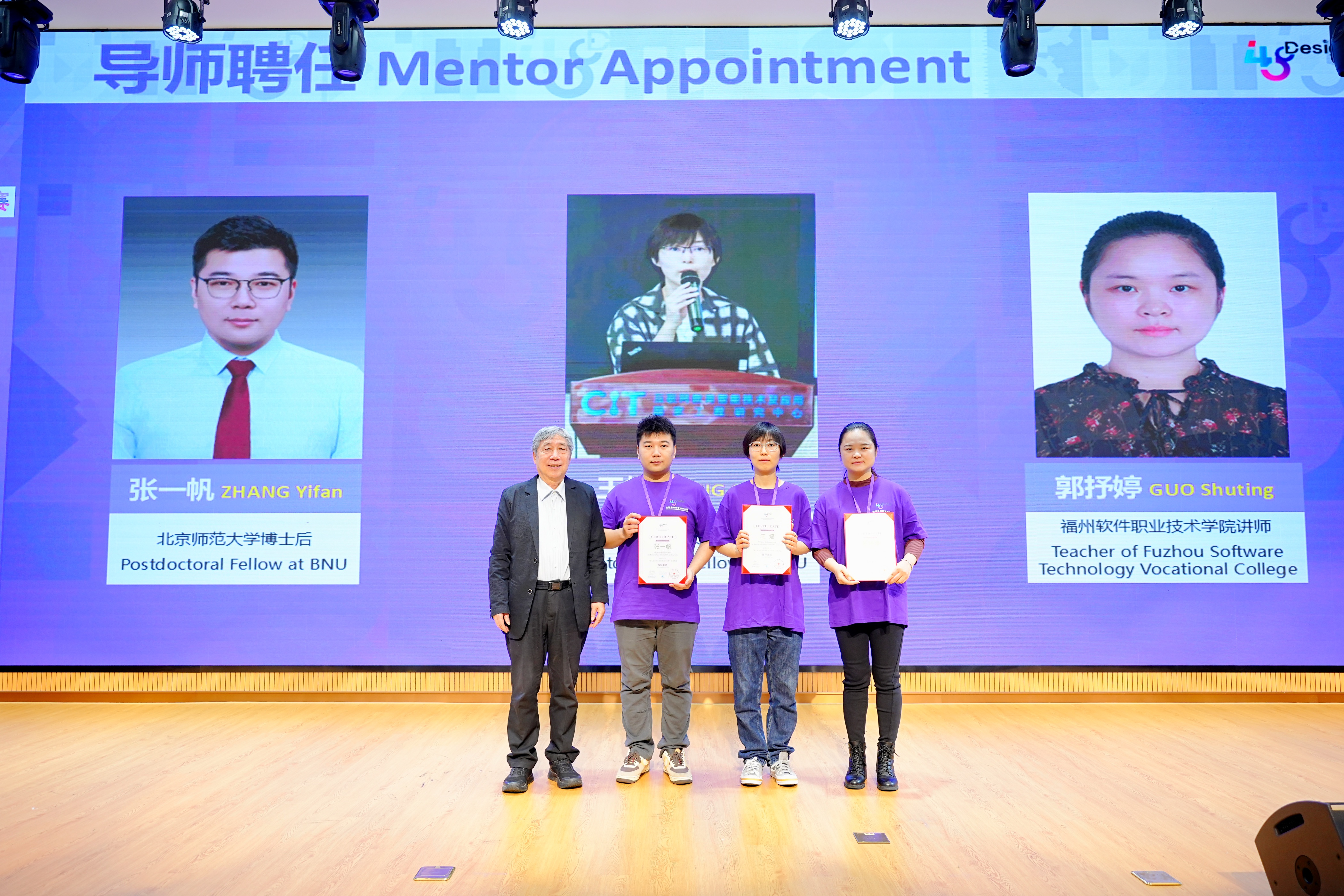
Team Project Optimization and Presentation Prof. Zhen Wei, Vice Dean of the School of Arts and Communication at Beijing Normal University, noted that the submitted projects demonstrated a strong sense of social responsibility and problem awareness. By deeply integrating technological innovation with cultural heritage and societal needs, the teams infused technology with humanistic value. He commended the participants for their collaborative spirit and the practical applicability of their outcomes, and encouraged them to continue reflecting on potential risks and challenges, keep people at the core of design, and achieve intellectual growth, knowledge transfer, and personal development through competition-based exchange.Mr. Shi Jianguo observed that the projects clearly articulated a problem-oriented design thinking process, with coherent progression from research focus to solution development and presentation. Many teams effectively leveraged digital and artificial intelligence technologies to address pain points in real-world contexts, demonstrating strong innovation and a clear reflection of contemporary trends, while generating practical value across artistic, industrial, and educational dimensions.
Mr. Lin Jiaquan, Chief designer and vice president of NetDragon, cautioned from the perspectives of industry practice and user experience that project designs should avoid overly broad problem definitions, misalignment between proposed solutions and the core issues, and the neglect of target users’ actual cost-bearing capacity. He emphasized the importance of “cost-effectiveness” in design, noting that solutions should be grounded in real user conditions and balance innovation with practical feasibility, so as to avoid detachment from real-world needs.
Following deliberation by the judging panel, the competition awarded a total of 26 prizes, including 2 Gold Awards, 4 Silver Awards, 6 Bronze Awards, 6 Excellence Awards, and 8 Finalist Awards.
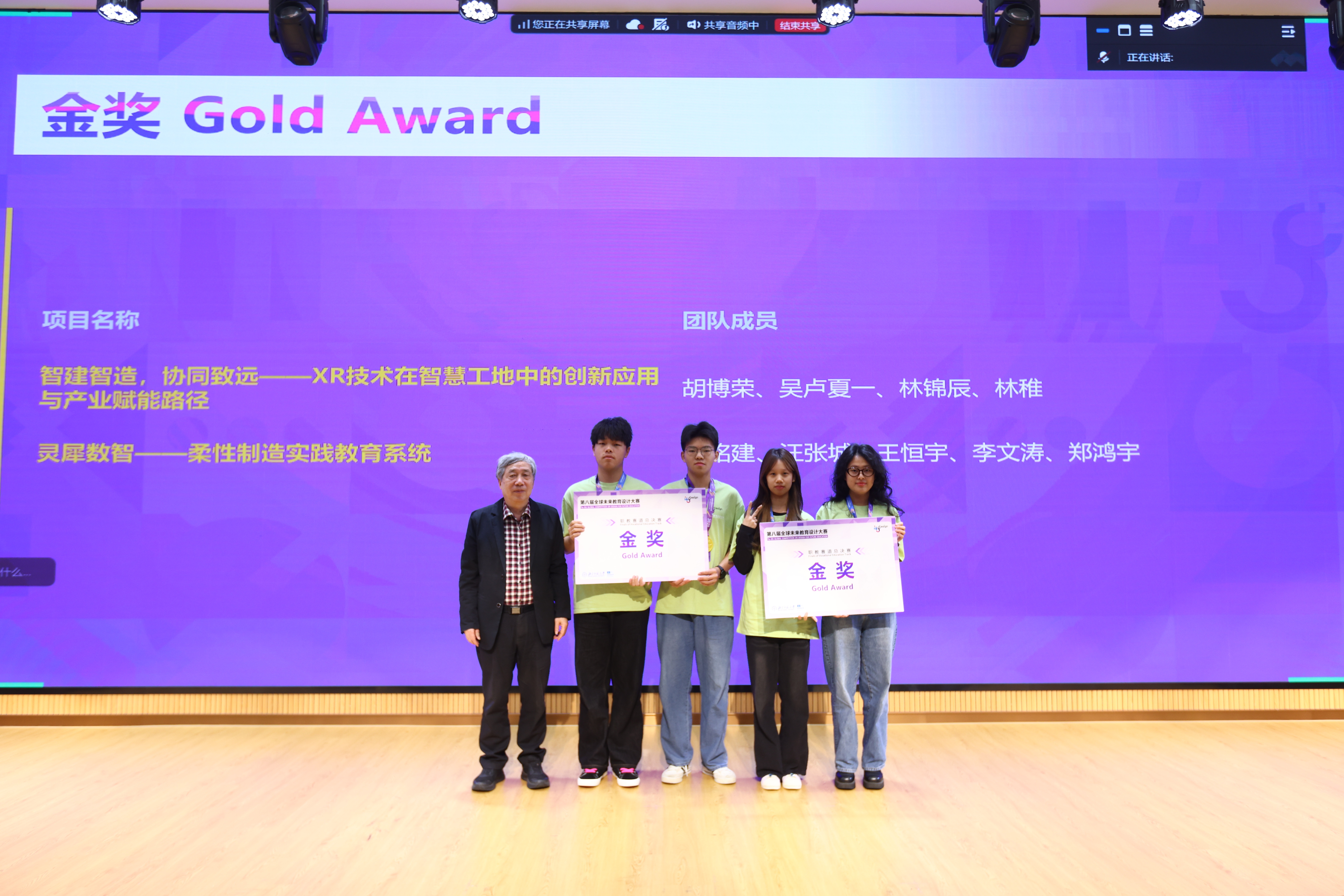
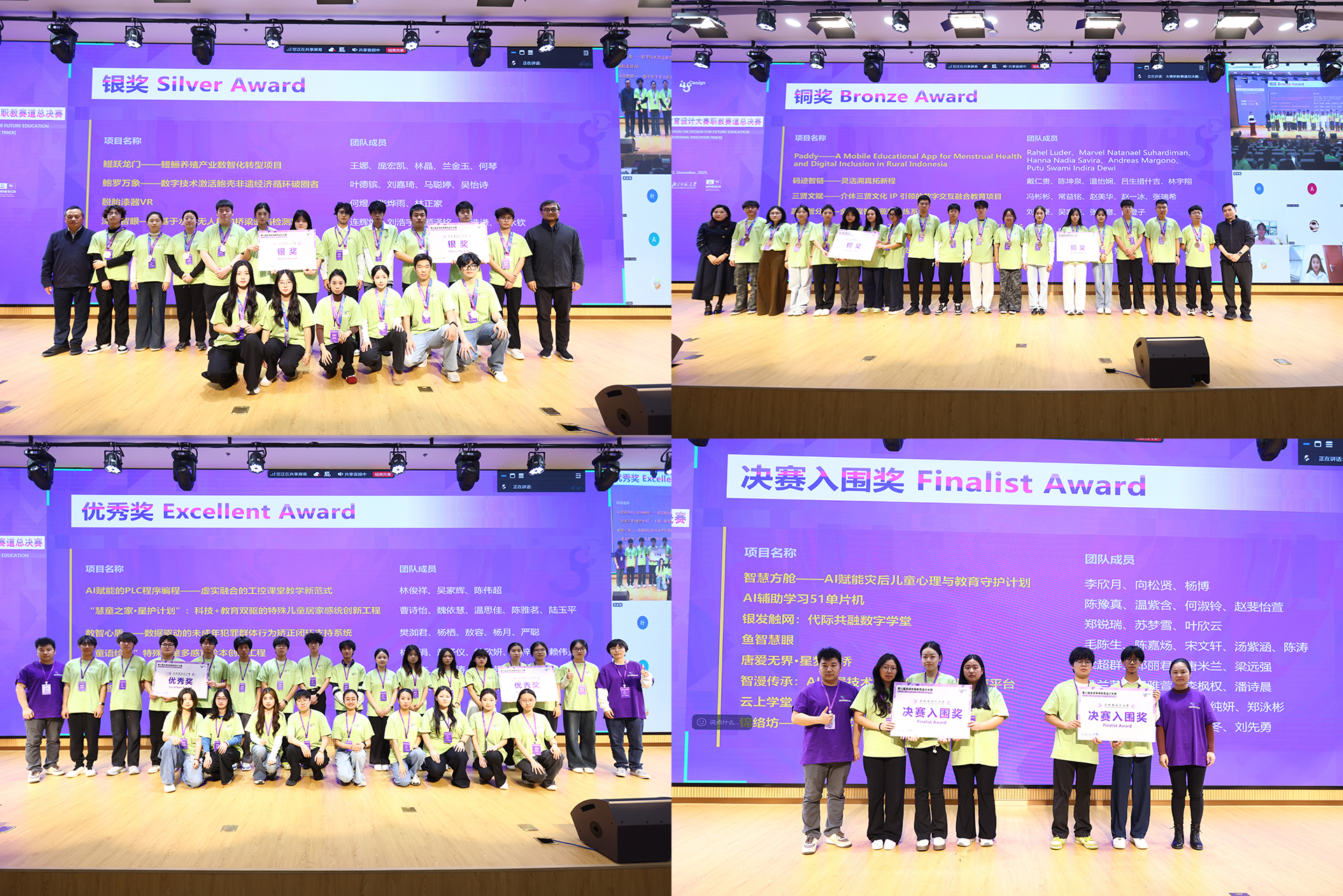
Group Photo of Winning Teams
Since its launch, the Global Competition on Design for Future Education has been successfully held for eight consecutive editions and has expanded to more than 40 countries worldwide. For this year’s Vocational Education Track, the Beijing Design Society and the Beijing Design Week Organizing Committee served as Special Support Organizations. The Finals were jointly hosted by Fuzhou Software Technology Vocational College, the Smart Learning Institute of Beijing Normal University, and the National Engineering Research Center of Cyberlearning and Intelligent Technology. Partners included the Fujian VR/AR Industry Vocational Education Steering and Advisory Committee and NetDragon. The event was also supported by the Project Group of Research and Application Demonstration on Key Technologies of Intelligent and Connected Learning Environment." The Finals of the Vocational Education Track of the 8th Global Competition on Design for Future Education concluded successfully. Over the two-day event, the competition showcased a high level of professional excellence while fostering in-depth dialogue on the future of vocational education. Through design-driven practice and the application of intelligent technologies, participating students demonstrated their capacity to respond to real-world needs and address global challenges with creativity and responsibility. Moving forward, the Competition will continue to bring together universities, industry partners, and international organizations to advance the integration of design thinking and intelligent technologies in vocational education, contributing to the cultivation of a new generation of globally minded, innovation-driven, skilled professionals.
Website: https://gcd4fe.bnu.edu.cn/