

Beijing Normal University Deeply Engaged in 2026 World Chinese Language Conference
From November 13 to 15, the 2026 World Chinese Language Conference was held at the China National Convention Center in Beijing. A series of academic events jointly hosted and organized by Beijing Normal University (BNU) took place alongside the conference.
Co-hosting the 2026 Annual Conference of the International Society for Chinese Language Teaching (ISCLT)
On November 14, the 2026 ISCLT Annual Conference, a key event of the World Chinese Language Conference, was held. Themed “Knowledge Innovation, Theoretical Innovation and Methodological Innovation in International Chinese Language Education,” the conference was co-hosted by ISCLT and BNU and organized by BNU's School of International Chinese Language Education and HanKao International Education Technology (Beijing) Co., Ltd. Nearly 400 experts and scholars, frontline teachers, students, and business representatives from more than 160 universities and institutions attended the conference. Zhong Yinghua, President of ISCLT, and Yu Tianqi, Deputy Director of the Center for Language Education and Cooperation (CLEC) of the Ministry of Education and Secretary-General of ISCLT, attended the opening ceremony and delivered remarks. Ma Xiaole, Dean of the School of International Education of Shandong University, chaired the opening ceremony.
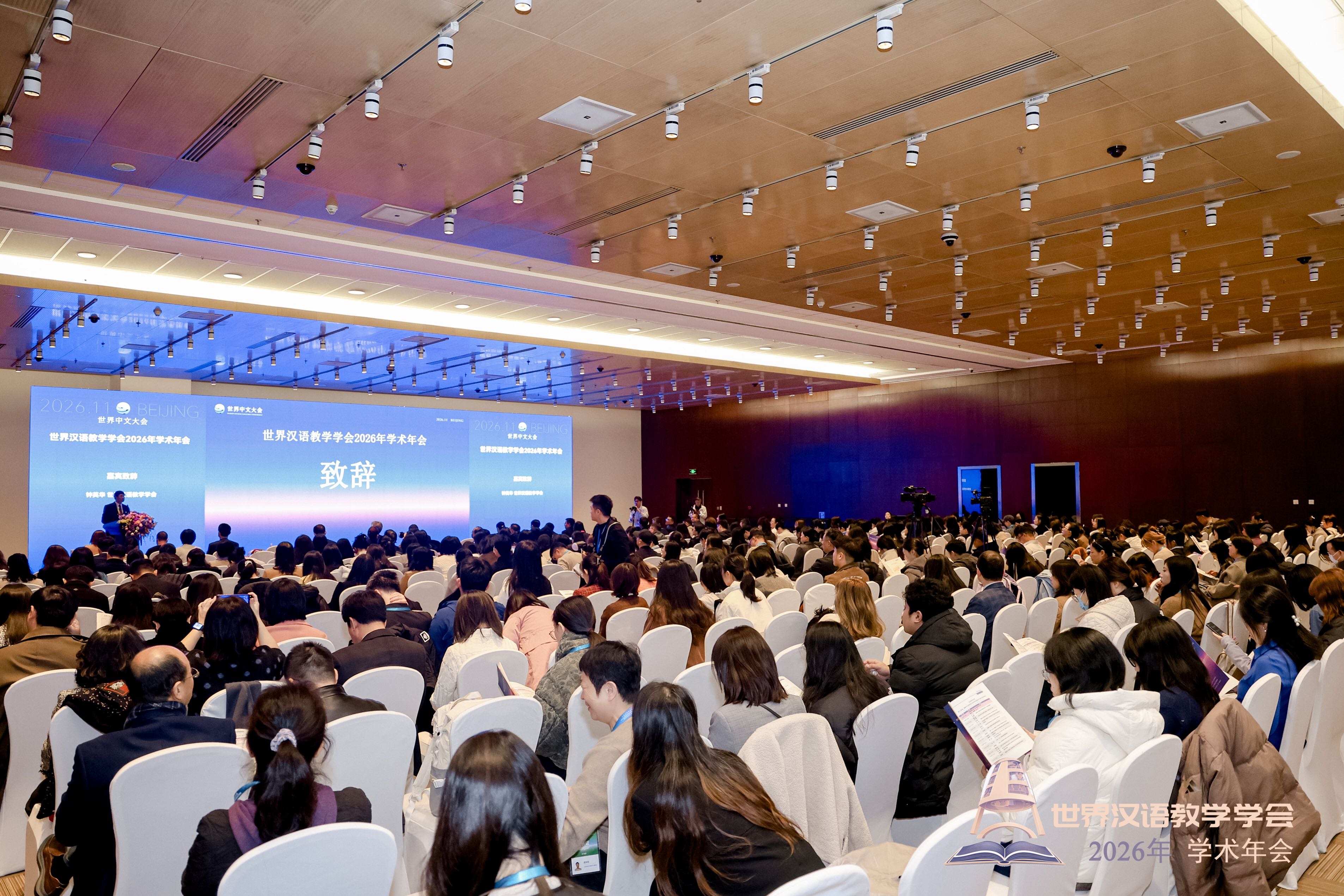
During the keynote session, six experts and scholars shared their research findings and practical experiences. Huang Ronghuai, Dean of the Smart Learning Institute of BNU, proposed that the bottleneck in AI-enabled international Chinese language education is shifting from “technology accessibility” to “competency accessibility” and “institutional accessibility,” and put forward a three-part agenda focusing on teachers' competence in Chinese, mutual recognition of micro-credentials, and open-source evaluation benchmarks.
The annual conference featured roundtable sessions, thematic presentations and other formats, with 78 presentations delivered across six venues. Discussions centered on topics such as the digital technologies and artificial intelligence in international Chinese language teaching, research and assessment; the construction of an autonomous knowledge system and the teaching of Chinese language and characters; innovation in research paradigms and methods; the development of localized theories informed by regional and country-specific perspectives; intercultural competence development and international communication from the perspective of mutual learning among civilizations; and cases of innovative practice and the “Chinese+” interdisciplinary curriculum system.
Since the first World Chinese Language Conference was held in 2023, BNU has continued to play an active role in the conference's academic activities, co-hosting and organizing the ISCLT annual conference as part of the WCLC for consecutive years, organizing parallel sessions, and coordinating experts and scholars to deliver keynote addresses and thematic presentations at multiple forums, thereby establishing a sustained mechanism for academic participation. During the 2026 conference, BNU’s faculty and students took part in a range of parallel sessions. Experts including Zhang Zhiyong, Chief Expert of the China Institute of Education and Social Development at BNU; He Zhen, Dean of the National Institute of Vocational Education; and Yu Shengquan, Executive Director of the Advanced Innovation Center for Future Education, attended the conference and delivered keynote speeches.
Holding the Autumn Session of the “China Studies Program Young Scholars’ Seasonal Salon”
The autumn session of the “China Studies Program Young Scholars’ Seasonal Salon” was held in Beijing from November 13 to 15. The event was hosted by the CLEC and BNU, and organized by the Institute of Chinese Culture | Jingshi Academy. The event brought together more than 50 young scholars from nearly 30 countries across Asia, Europe, Africa and the Americas participating in the New Sinology Program. The event aimed to foster cultural dialogue between China and other countries and promote exchanges and mutual learning among civilizations.
On November 13, the young scholars attended the opening ceremony of the 2026 World Chinese Language Conference, where they gained firsthand insights into the latest developments in international Chinese language education and gained an understanding of the integrated communication approach of “Chinese + Culture.” On the morning of November 14, Gao Shu, a research fellow at the Chinese National Academy of Arts and editor-in-chief of the academy's journal on intangible cultural heritage, delivered a lecture on China's intangible cultural heritage protection practices. The lecture was chaired by Xiao Kai, Vice Dean of the Institute of Chinese Culture | Jingshi Academy.
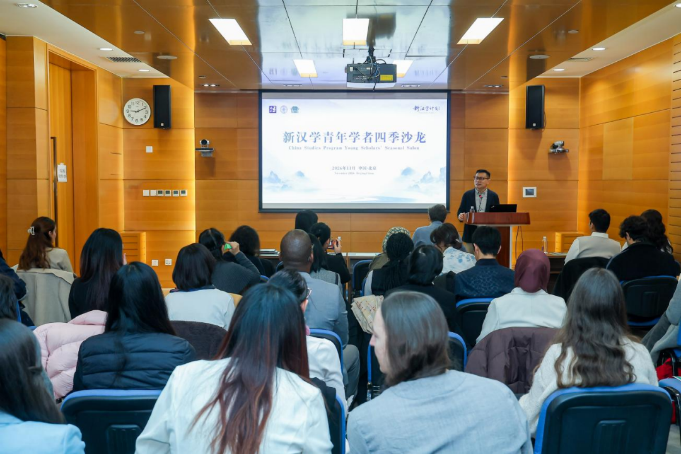
On the afternoon of November 14, the salon continued with an intangible cultural heritage (ICH) workshop. The young scholars discussed topics such as “Chinese linguistic and cultural genes in intangible cultural heritage: dialects, legends and folk narratives,” “Translation and cross-cultural communication of language-related intangible cultural heritage: how to make Chinese stories accessible to global audiences,” and “Integrating intangible cultural heritage experiences into Chinese language classrooms overseas: instructional design and practice for ‘Chinese + ICH.’” Gao Shu and Xiao Kai served as discussants. The workshop was moderated by Ma Kesi, a German sinologist and faculty member of the Institute of Chinese Culture | Jingshi Academy.
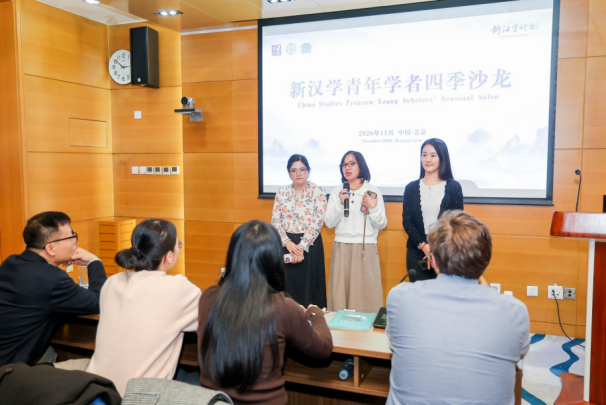
On November 15, the young scholars sat in on the conference's parallel forum “Global Expression of Chinese Language and Culture and Mutual Learning among Civilizations,” and visited the China National Arts and Crafts Museum (China Intangible Cultural Heritage Museum), where they viewed national-level intangible cultural heritage items and living demonstrations of traditional practices. They also completed an activity titled “Finding Linguistic Traces in Intangible Cultural Heritage,” examining how Chinese vocabulary and narratives embody and transmit intangible cultural heritage through inscriptions, auspicious phrases, opera librettos and oral explanations of transmitted crafts.
Thai Educators' Delegation Visits BNU for Exchange
During the World Chinese Language Conference, a delegation of Thai educators visiting China, funded by CLEC of the Ministry of Education and organized by the School of International Chinese Language Education, visited BNU for academic and educational exchanges. The delegation comprised 16 educators from seven institutions: Rangsit University, Pibulsongkram Rajabhat University, Thepsatri Rajabhat University, Phuket Rajabhat University, Suan Sunandha Rajabhat University, Siam University, and Phranakhon Rajabhat University.
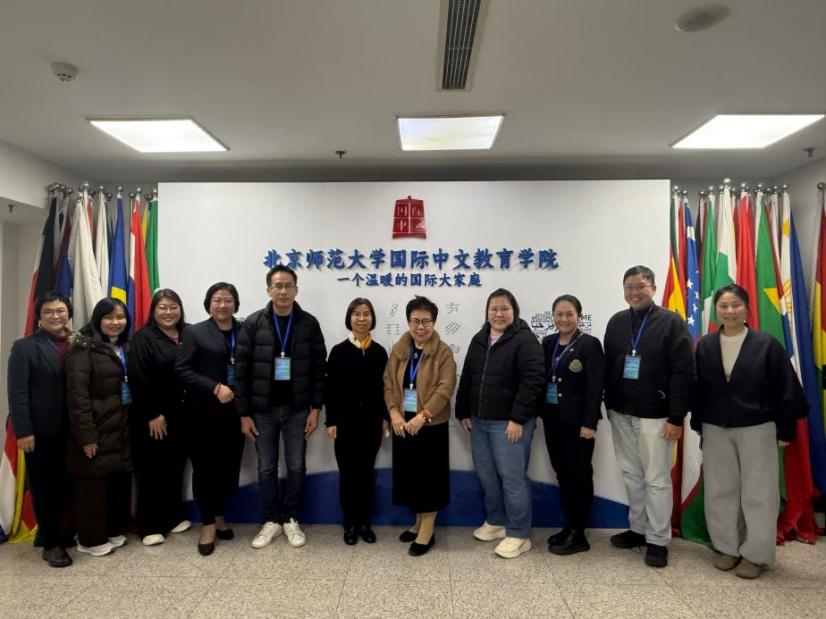
During the five-day visit, the delegation explored the iFLYTEK AI Exhibition Hall to learn about the practical application of intelligent speech, natural language processing and the iFLYTEK Spark large language model in smart education and other application areas; visited The Second High School Attached to BNU, where they learned about China's basic education through an introduction to the school, tours and discussions; held discussions with BNU's School of Artificial Intelligence on talent development in the field of “AI + Education”; visited the School of International Chinese Language Education and the University's Online Education Resources Center to learn about the development of digital educational resources; and attended the 2026 World Chinese Language Conference at the China National Convention Center.
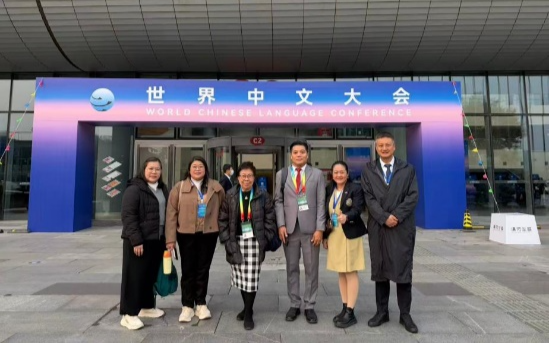
The visit deepened educational exchanges and people-to-people ties between Chinese and Thai universities, giving fresh impetus to bilateral cooperation in language education and mutual learning among educators from the two countries.
Going forward, BNU will continue to leverage its disciplinary strengths, pool resources and contribute actively to the development of building international exchange platforms such as the World Chinese Language Conference. Through high-quality academic conferences, it will promote the continued development of international Chinese language education as an academic discipline, and take on new responsibilities and achieve new accomplishments in serving China's high-level opening-up and exchanges and mutual learning among civilizations.