

Professor Huang Ronghuai Led a Delegation to Attend the Harvard China Education Symposium: Exploring the New Social Contract for Learning and Education in the Intelligent Era
From April 17 to 18, 2026, the 17th Harvard China Education Symposium (CES) was convened at the Harvard Graduate School of Education. Professor HUANG Ronghuai, Co-Dean of the Smart Learning Institute at Beijing Normal University (SLIBNU) and UNESCO Chair in Artificial Intelligence and Education, led the delegation to the symposium. The delegation included XU Lin, Chief Operating Officer of the Global Smart Education Network (GSENet); CHANG Tingwen, Assistant to the Dean of SLIBNU; and PhD candidate LIU Mengyu. Professor HUANG Ronghuai delivered a keynote speech entitled 'Rethinking the Foundational Logic of Education in the Intelligent Society: The New Social Contract for Education and Authentic Agentic Learners' at the forum.
Founded in 2010, the Harvard CES is the official student organization of the Harvard Graduate School of Education. It is the longest-established and most influential nonprofit platform focused on Chinese education among leading U.S. institutions. The forum is dedicated to fostering international exchange of educational thought, bringing together educators and distinguished leaders from China and the U.S. to engage in dialogue, collaboration, critical reflection, and to present research and practical outcomes. The current symposium, entitled 'A Thousand Leaps of Change: Illuminating the Future of Education,' convened global scholars, education practitioners, and policymakers to collectively examine approaches for cultivating learners capable of thinking, creating, and acting in an increasingly uncertain world. The forum emphasized empowering learners to meet opportunities and challenges with an open mindset and to advance innovation through proactive engagement.
The symposium brought together a distinguished group of internationally renowned scholars, education experts, and institutional representatives, including Mr. YU Yougen, Education Counsellor of the Consulate General of the People’s Republic of China in New York; Professor David Perkins, Senior Professor Emeritus at Harvard Graduate School of Education; Professor Fernando Reimers, Director of the Global Education Innovation Initiative at Harvard Graduate School of Education; Associate Professor Justin Reich, Director of MIT Teaching Systems Lab; Professor Jal Mehta; Ms. Nicole Mills, Joint Director of Language Programs at Harvard University’s Department of Romance Languages and Literatures; Senior Lecturer LI Junlei of Harvard Graduate School of Education; and Professor YUE Xiaodong, an alumnus of Harvard Graduate School of Education and Distinguished Professor at Capital Normal University, along with representatives from various leading institutions and organizations.
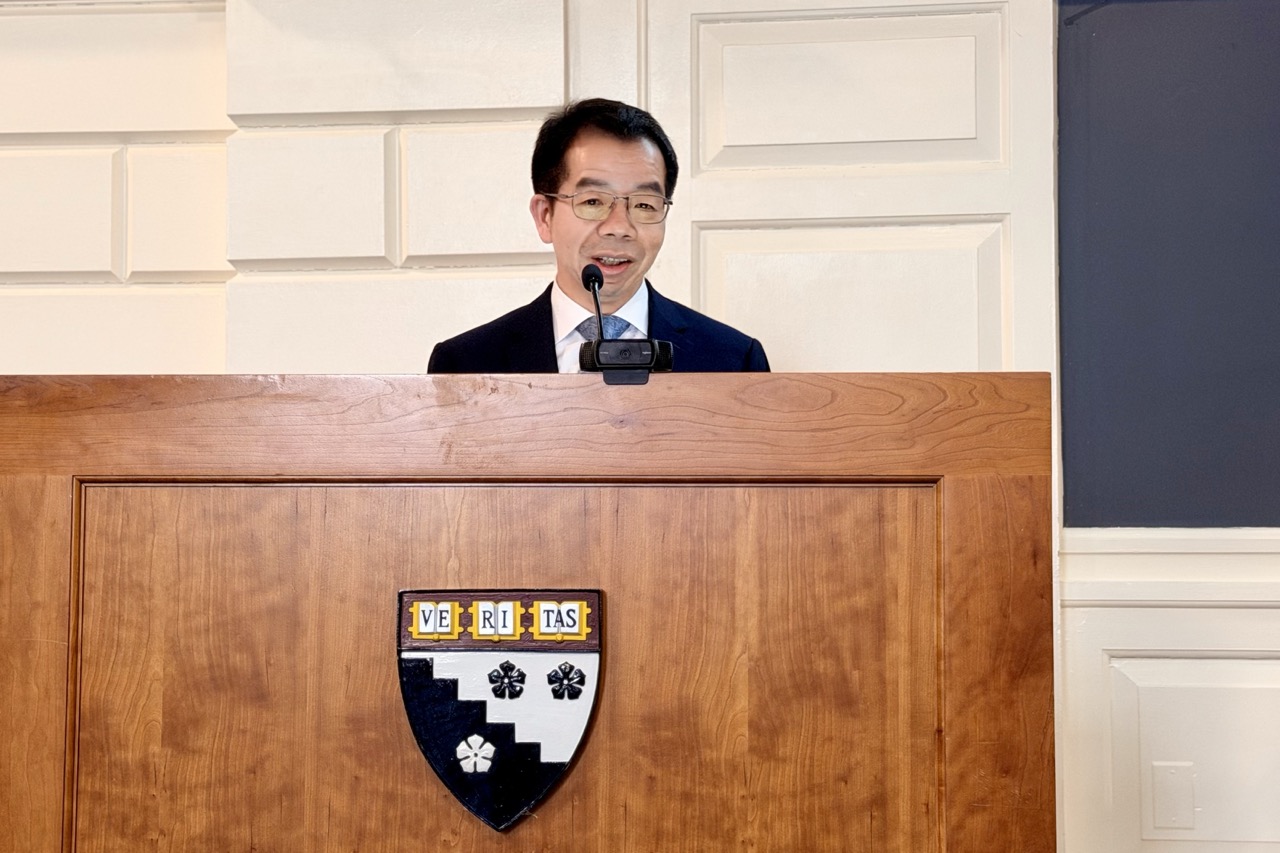
Professor HUANG Ronghuai attended the 17th Harvard CES and delivered the keynote speech.
In the face of an escalating global learning crisis and increasing economic and social uncertainties, UNESCO has proposed the 'Reimagining Our Futures Together: A New Social Contract for Education,' advocating for the guaranteed right of all individuals to lifelong access to quality education, and further emphasizing education as a public undertaking and a collective interest. Within this context, as artificial intelligence rapidly integrates into social life, knowledge production, and educational systems, the challenges confronting education extend beyond mere technical adjustments; they entail a profound reconfiguration of its foundational logic and associated social contract relationships, necessitating a comprehensive re-evaluation of the roles, rights, responsibilities, and relationships of diverse educational stakeholders. Professor HUANG Ronghuai has previously provided a forward-looking analysis of the educational landscape in 2050 in his publication, Smart Education: Pathways Toward Education 2050. This keynote constitutes a further expansion and deepening of that analysis, grounded in the long-term perspective of education in 2050. It underscores that while the core mission of education and the fundamental principles of learning remain stable overall, the organizational structures of schools, pedagogical models, and practical modalities must continue to evolve to return to learner-centered development and foster comprehensive human growth authentically.
Professor HUANG Ronghuai emphasized that the rapid advancement of artificial intelligence technology offers new opportunities for education, including personalized learning, scalable support, and the enhancement of educational equity, while simultaneously introducing multiple tensions in the development of education. These tensions include, first, the conflict between immediate benefits and the long-term development of humanity; second, the tension between individual awareness and collective consciousness; and third, the tension between instrumental rationality and habitual reliance. Education must not be simplified to a pursuit of efficiency, convenience, and short-term outcomes; rather, it should focus more on the long-term cultivation of learners’ subjectivity, judgment, and character.
He further emphasized that, in the context of an intelligent society, the Digitalization, Cyberization, and Intelligentization of technology are deeply intertwined with transformations in social and cultural institutions—including Knowledge Generation, Educational Institutions, and Talent Cultivation—and profoundly influence the reform of learning approaches and the transformation of school education. Therefore, learning and education in the Intelligent Era can be conceptualized as a five-layer social pact system jointly constituted by society and culture, government and policy, schools and families, teachers and students, with the 'authentic agentic learner' at its core, to drive a more systematic, collaborative, and future-oriented transformation of education in this era.
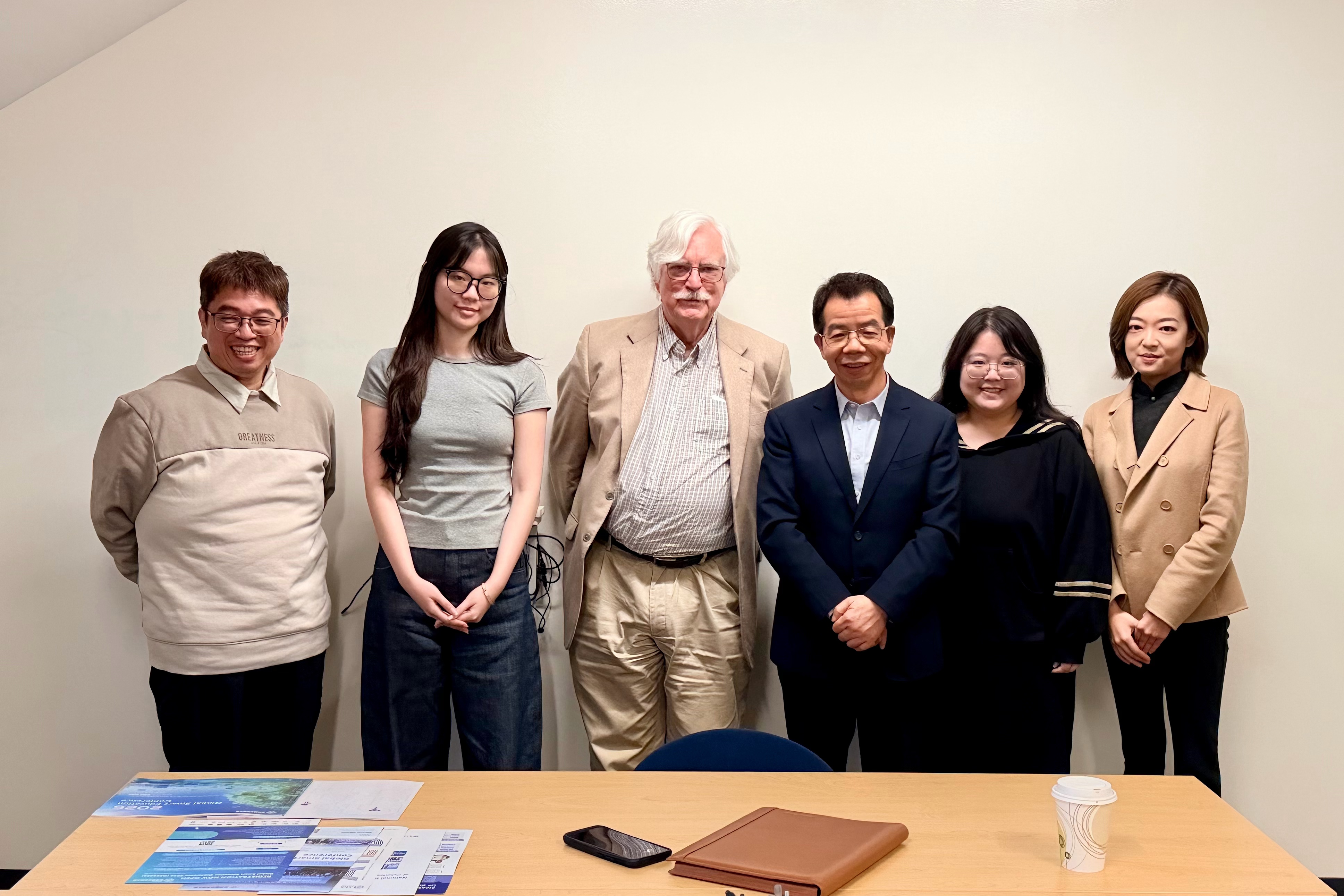
Professor HUANG Ronghuai (third from right) also led a delegation to meet with Professor Chris Dede (third from left) of the Harvard Graduate School of Education.
During the symposium, Professor HUANG Ronghuai held a meeting with Professor Chris Dede, a distinguished scholar in educational technology at the Harvard Graduate School of Education. They conducted in-depth exchanges on how artificial intelligence can effectively empower educational and instructional transformation, applications of immersive learning (XR), and the frontiers of learning sciences. Drawing on their respective recent research progress and practical experiences, the two scholars exchanged insights on human-machine collaborative learning, personalized learning path design, and the reconstruction of educational ecosystems, while exploring potential avenues for future collaboration.
Professor Chris Dede has been a long-standing contributor to educational technology innovation and research on immersive learning. In academic collaboration, he has served alongside Professor HUANG Ronghuai as the co-editor-in-chief of the Springer series 'Smart Computing and Intelligence' and engaged in multi-level collaborative research with the SLIBNU. Additionally, Professor Chris Dede co-authored the seminal volume 'Virtual, Augmented, and Mixed Realities in Education' with Professor HUANG Ronghuai and Dr. LIU Dejian, which has exerted significant influence in the field, attracted substantial attention, and achieved high citation and access rates, representing a flagship work within the series.