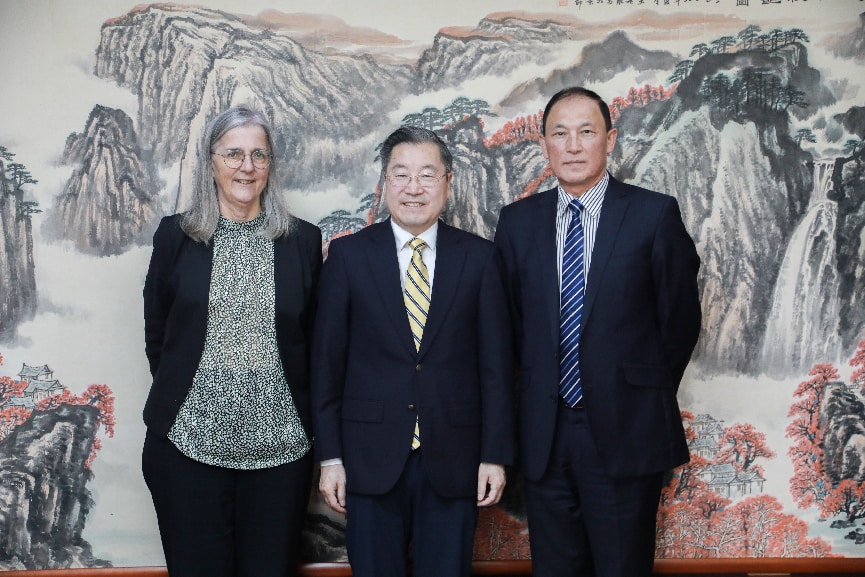

Deputy Vice-Chancellors of the University of Queensland Delegation Lead Delegation on Visit to Beijing Normal University
On November 17, a delegation from the University of Queensland (UQ) in Australia, led by Rongyu Li, Deputy Vice-Chancellor and Vice-President (Global Engagement), and Sue Harrison, Deputy Vice-Chancellor (Research and Innovation), visited Beijing Normal University (BNU). Zhou Zuoyu, Vice Chair of the University Council and Director of the UNESCO International Research and Training Centre for Rural Education (INRULED), met with the delegation. Building on their existing cooperation in healthy ageing, the two sides agreed that cooperation should not be limited to a single field; instead, the two universities should fully leverage their disciplinary strengths, broaden the scope of cooperation, and deepen and substantiate their strategic partnership.
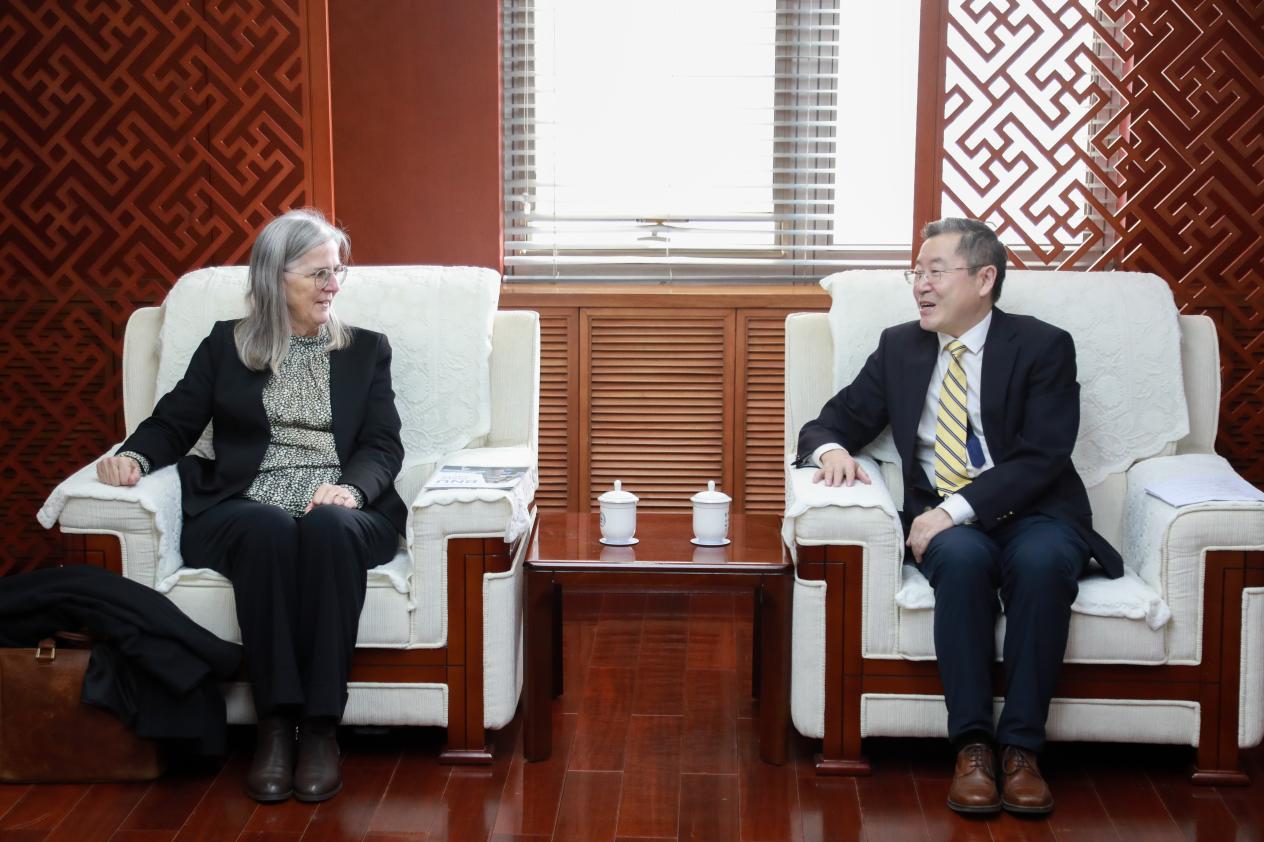
Zhou Zuoyu welcomed the delegation and briefly introduced the university's history, disciplinary structure, and the operation of its Beijing and Zhuhai campuses. He noted that BNU has deep strengths in education, psychology, neuroscience, the basic sciences, and the humanities and social sciences. Its internationalization strategy rests on four pillars — academic excellence, educational innovation, international understanding, and social responsibility — and places strong emphasis on cultivating students' critical thinking and global competence. He said that UQ is an important partner of BNU, that cooperation at the university level should focus on building platforms, and that vibrant cooperation stems from shared interests among scholars; cooperation should therefore move from framework consensus to substantive implementation.
The UQ delegation said that UQ regards BNU as a key strategic partner and hopes to pursue deep, substantive cooperation. University management should focus on providing enabling support, motivating researchers, and promoting resource sharing and interdisciplinary innovation.
The two sides reached a consensus to use healthy ageing as a breakthrough point while broadening the overall scope of cooperation. Next, they will map the two universities' researcher resources, establish a coordination mechanism, prepare thematic meetings, and formulate annual implementation plans, so as to advance multi-dimensional cooperation in talent development, scientific research, and policy dialogue, jointly address global issues, and cultivate young talent with global competence.