

Walking with Sinology, Journeying with China: Stories of Young Sinologists at Beijing Normal University
From November 14 to 16, the 2025 World Chinese Language Conference was held in Beijing, bringing together 61 young sinologists from 51 countries. Among the sinologists were several alumni of Beijing Normal University (BNU). Though they come from different countries and backgrounds, they share a formative period of youth spent on BNU’s campus—a shared experience that has shaped them into scholars capable of understanding China and fostering dialogue between civilizations.
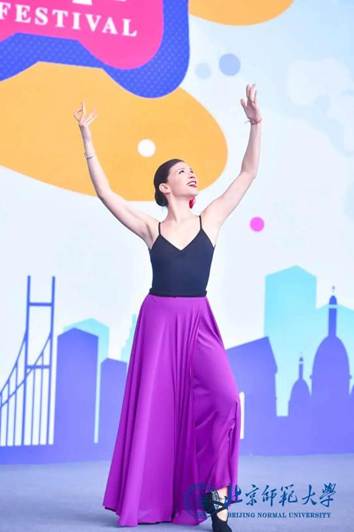
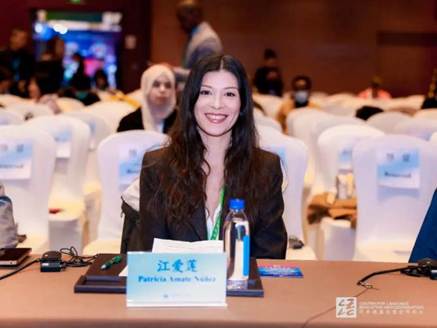
Jiang Ailian: Believing in a Future Where Civilizations Coexist in Harmony
Originally from Spain, Jiang Ailian is now affiliated with the Institute of Communication and Social Studies at the University of Almeria, where she supervises undergraduate and master’s students researching China-related topics and reviews academic papers. From 2022 to 2024, she came to BNU under the International Young Sinologists Program, studying under Professor Zhao Wei of the School of Sociology and applying social semantics to research Dream of the Red Chamber. “Meeting Professor Zhao Wei changed the trajectory of my life,” Jiang recalled. At the time, she was a foreign student deeply passionate about Dream of the Red Chamber, yet often hesitant and worried about making mistakes. Her supervisor’s patient guidance, consistent encouragement, and every conversation they shared helped her move her research forward. Under Professor Zhao’s mentorship, she successfully completed her doctoral dissertation. Today, Jiang has brought her passion for Dream of the Red Chamber back to Spain, where she now guides her own students in reading and researching this literary masterpiece—continuing the academic journey that began at BNU.
Feng Haicheng: Knowledge Builds Peace, and Sinology Connects the World
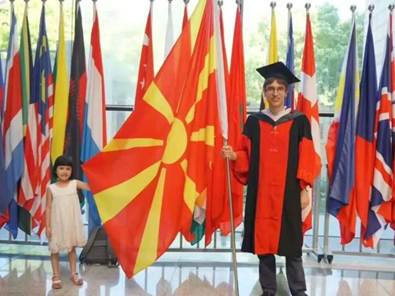
Feng Haicheng, who comes from North Macedonia, was one of the young sinologists from BNU. His intention was clear: to bring sinology out of the ivory tower and into the public sphere, gaining broader recognition and support for the field. “To be acknowledged by Chinese people is a tremendous honor,” he said, “not only for me personally, but for our entire generation of young sinologists.”
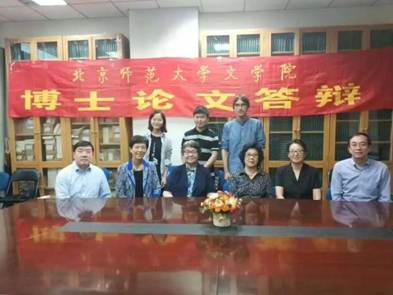
Feng is a scholar of Chinese philology. From 2014 to 2018, he pursued his doctoral studies under Professor Wang Ning at the School of Chinese Language and Literature at BNU. Viewing sinology through the analytical lens of a philologist, he has developed his own understanding of its contemporary significance and value. “Sinology serves as a bridge that fosters mutual understanding between Chinese civilization and other civilizations around the world,” Feng noted. “It provides a platform for scholars from different countries to engage in dialogue. The increasing participation of young sinologists from the Global South has broken the past intellectual monopoly held mainly by Western countries, revealing a truly multilateral character in today’s academic landscape.”
Fan Yuxue: Continuing to Write in Chinese to Foster Understanding and Inclusiveness Among Civilizations
For Vietnamese young sinologist Fan Yuxue, being invited to attend this conference was deeply inspiring. “It reaffirmed for me that the path I have chosen all these years is indeed the right one,” she said. Fan did not major in Chinese as an undergraduate. Yet driven by her love for China’s rich cultural heritage, she chose—and continued—to study the Chinese language. A decade ago, Chinese was far less popular globally than it is today; her decision was questioned by many. But she always believed in the charm of the Chinese language and the wisdom embedded in Chinese culture. Now, her original aspiration has been rekindled: to continue writing in Chinese and to help build understanding and inclusiveness between civilizations.
It was during her studies at BNU that Fan discovered her true mission: to serve as a bridge between Chinese and Vietnamese cultures. She pursued cross-cultural studies between China and Vietnam for her doctoral research, during which she came to appreciate the contemporary relevance of traditional Chinese culture. “The concept of ‘tianxia’ in the Chinese cultural context reflects an open global outlook in today’s world,” she observed. She also witnessed in her mentors the qualities that Chinese culture upholds—gentleness, harmony, and sincerity—as well as the spirit embodied in BNU’s motto, “Learn, so as to instruct others; act, to serve as example to all.” Fan remains deeply grateful to the faculty of the School of International Chinese Language Education, and remembers fondly their profound knowledge and warm, generous demeanor.
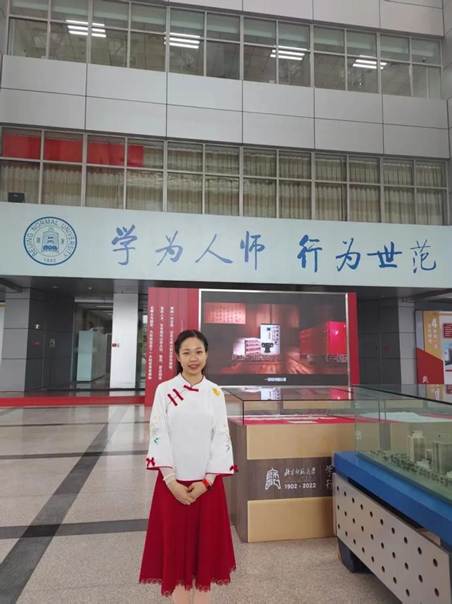
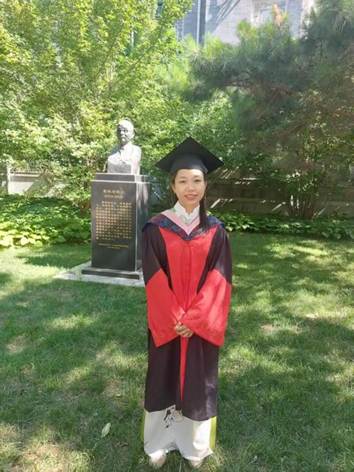
Li Ruien: Today’s Students Are Tomorrow’s Sinologists
Li Ruien first came to BNU as a visiting doctoral researcher from Columbia University, where he conducted his academic study under the introduction and guidance of Professor Liu Baocun from the Faculty of Education. For Li, academic exchange between China and the rest of the world will continue to deepen, allowing more students—just like himself—to come to China and gain a deeper understanding of the country. “Today’s students are tomorrow’s sinologists,” he said.
Li Ruien is now an associate professor of international and comparative education at Soka University of America. He believes that his current academic career is inseparable from his time at BNU, which he considers the very starting point of his scholarly life. At BNU, he benefited greatly from Professor Liu’s courses, conducted research with faculty, staff, and students, and gained an in-depth understanding of China’s higher education system. He also noted that BNU’s abundant academic resources, together with its strong connections and exchange activities with other universities, enabled him to engage with scholars from across China and abroad. These opportunities played a crucial role in shaping his subsequent academic research and professional development.

The four young sinologists whose academic journeys are closely connected with BNU have, through their personal experiences and scholarly pursuits, told vivid stories of dialogue and cooperation between BNU, China, and the wider world.
Using Chinese as a Bridge to Foster Global Talent
From November 14 to 16, the 2025 World Chinese Language Conference was held in Beijing. BNU co-organized Parallel Session V: Mutual Learning Between Chinese and Foreign Civilizations and the Training of Scholars in Chinese Studies, hosted Special Session VI: 2025 Annual Conference of the World Association for Chinese Teaching. Entrusted by the Center for Language Education and Cooperation of the Ministry of Education, BNU also organized the International Sinology Workshop “Chinese Modernization: Inheritance and Innovation of Civilization” for young sinologists from November 13 to 16. Doctoral students from BNU’s International Young Sinologists Program actively participated in all conference activities. They engaged in discussions with scholars from China and abroad, shared their research outcomes, and demonstrated the university’s forward-looking efforts and youthful responsibility in the fields of international Chinese education and Chinese studies.
Since BNU began training students under the International Young Sinologists Program in 2013, the university has cultivated 56 outstanding young scholars to date. The strong presence of these doctoral students at the 2025 World Chinese Language Conference reflects BNU’s solid achievements in advancing international talent development and fostering mutual learning among civilizations. It also represents a vivid example of the university’s commitment to promoting global academic exchange. Looking ahead, BNU will continue to make full use of high-level platforms such as the World Chinese Language Conference to expand academic exchange opportunities for international students, support young scholars in stepping onto the global stage, and contribute its wisdom and strength to promoting the global presence of the Chinese language and enhancing intercultural dialogue worldwide.