

The Delegation Led by the President of University Tunku Abdul Rahman Visited Beijing Normal University
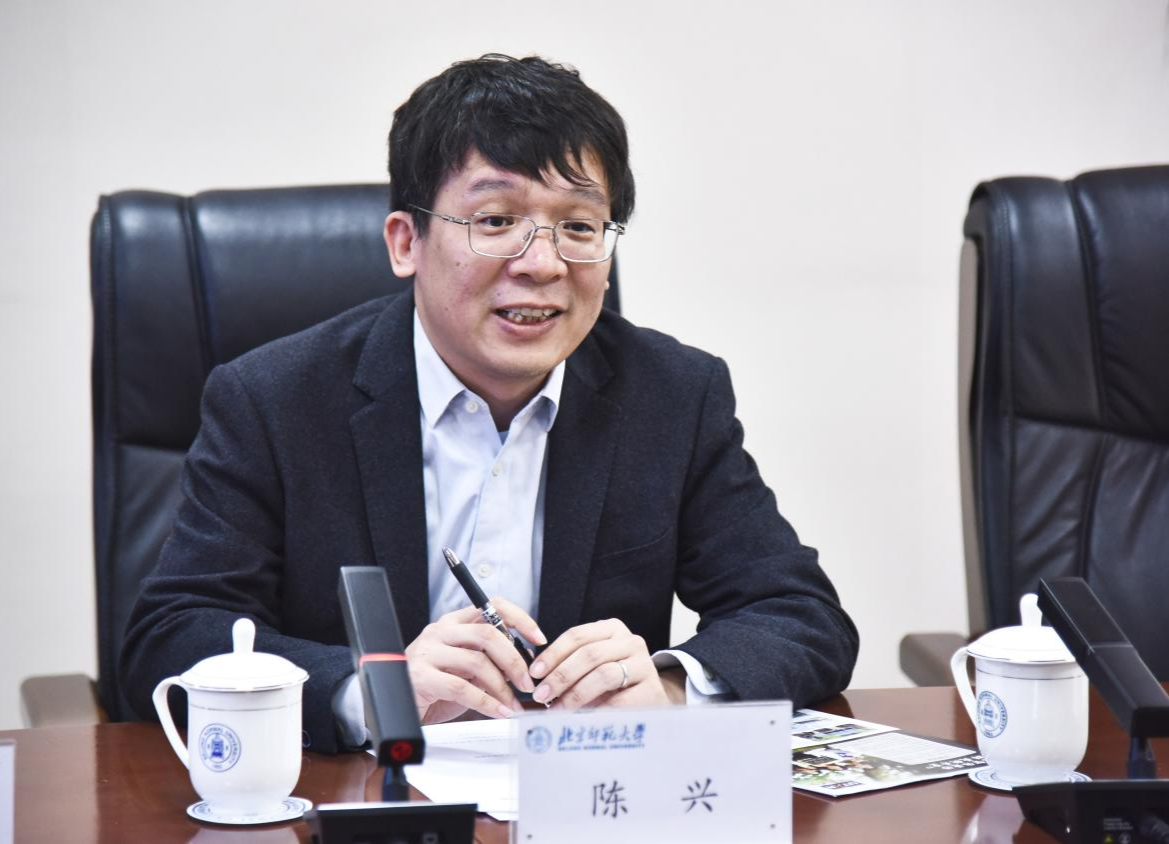
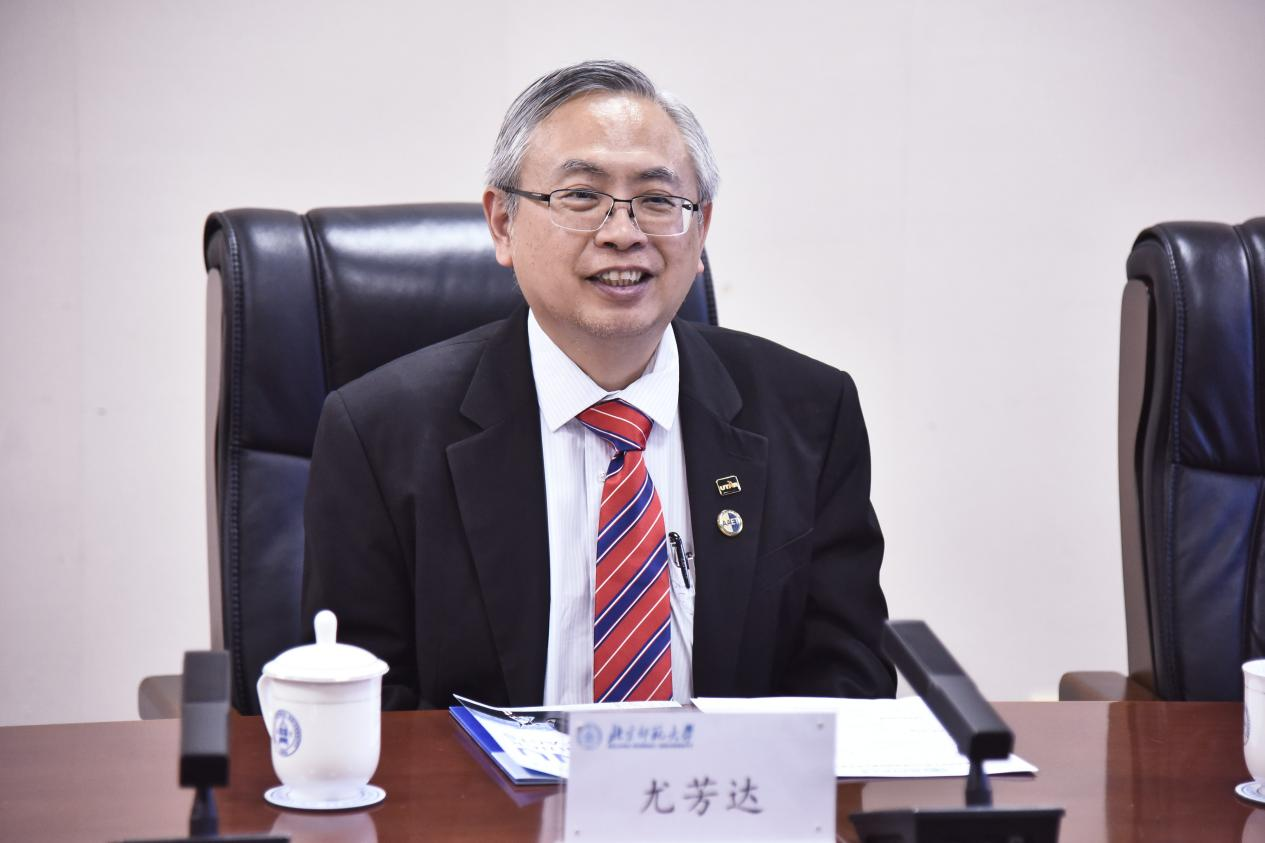
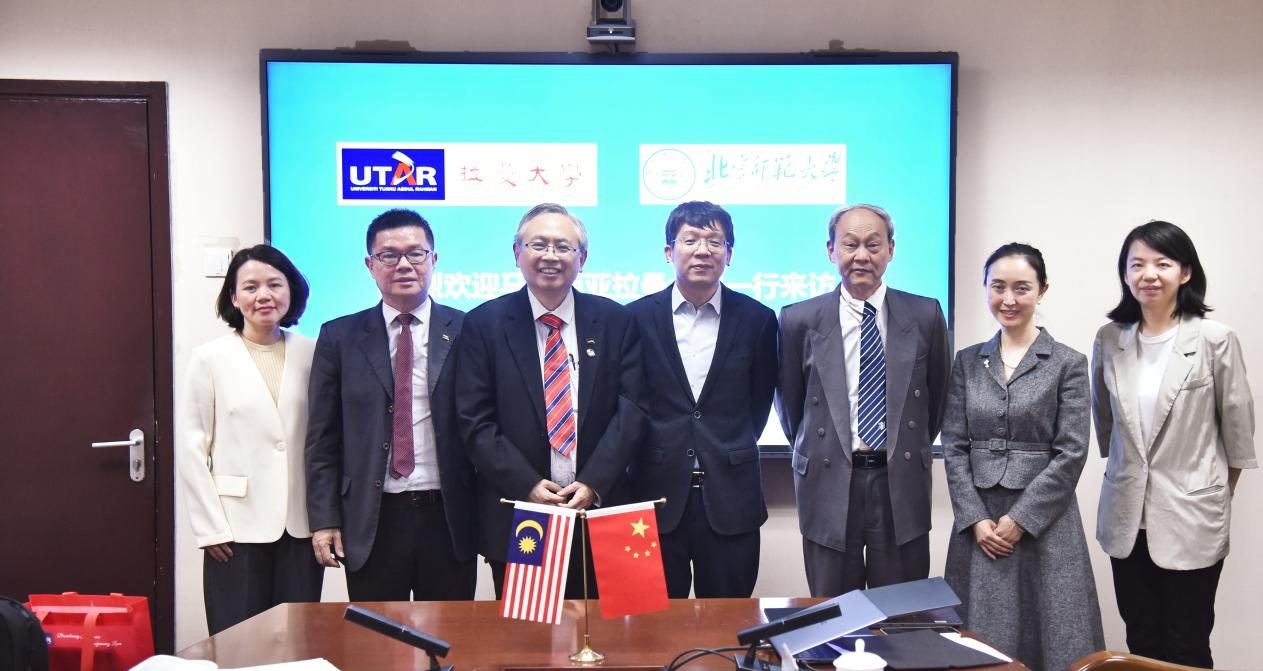
On the afternoon of April 23, a delegation led by Ewe Hong Tat, President of University Tunku Abdul Rahman (UTAR) from Malaysia, visited Beijing Normal University (BNU). Vice President Chen Xing met with the guests in the Main Building.
Chen Xing warmly welcomed the visit of Ewe Hong Tat and his delegation, and introduced BNU's educational layout and its development achievements to the guests. He pointed out that BNU attaches great importance to serving and implementing the "Belt and Road" Initiative, and expressed the hope that the two universities will base themselves on their respective strengths, focus on key areas such as discipline construction, mutual exchange of teachers and students, and joint scientific research to deepen pragmatic cooperation and enhance mutual learning, working together to positively contribute to promoting educational and cultural exchanges and friendly interactions between China and Malaysia.
Ewe Hong Tat expressed his gratitude for the warm reception by BNU and introduced the educational characteristics and development of UTAR, specifically sharing the advantages the university has accumulated in areas such as remote sensing research, Chinese language teaching, and industry-university-research cooperation. He stated that he eagerly looks forward to establishing a long-term and stable partnership with BNU.
The relevant person from Business School and the Office of International Exchange and Cooperation accompanied the meeting. The two sides held in-depth discussions on signing a university-level memorandum of understanding and deepening exchange and cooperation in economics and management disciplines, reaching a preliminary consensus.
Founded in 2002, UTAR is a top private, non-profit comprehensive higher education institution in Malaysia, with two main campuses in Kampar and Sungai Long, and a student population of nearly 20,000. As a member of the Alliance of International Science Organizations in the "Belt and Road" region, the university has long maintained regular academic exchanges and pragmatic cooperation with many top-tier universities in China. It has established the largest Institute of Chinese Studies in Southeast Asia in terms of educational scale. Meanwhile, it deeply promotes the integration of industry and education, co-building industry academies with well-known Chinese enterprises such as Huawei and Geely Group. For many years, the university has played an important bridge role in the people-to-people and cultural exchanges and cooperation between China and Malaysia.