

The Research Group Led by Lv Nan from the College of Life Sciences Published an Article in Science Advances
Recently, the research group led by Lv Nan from the College of Life Sciences published a paper titled "A synthesized framework for the evolutionary origins of avian obligate brood parasitism" in Science Advances.

The paper provides a comprehensive framework linking environmental pressures, life-history constraints, and ecological opportunity in explaining the remarkable convergent evolution of OBP across diverse avian lineages.
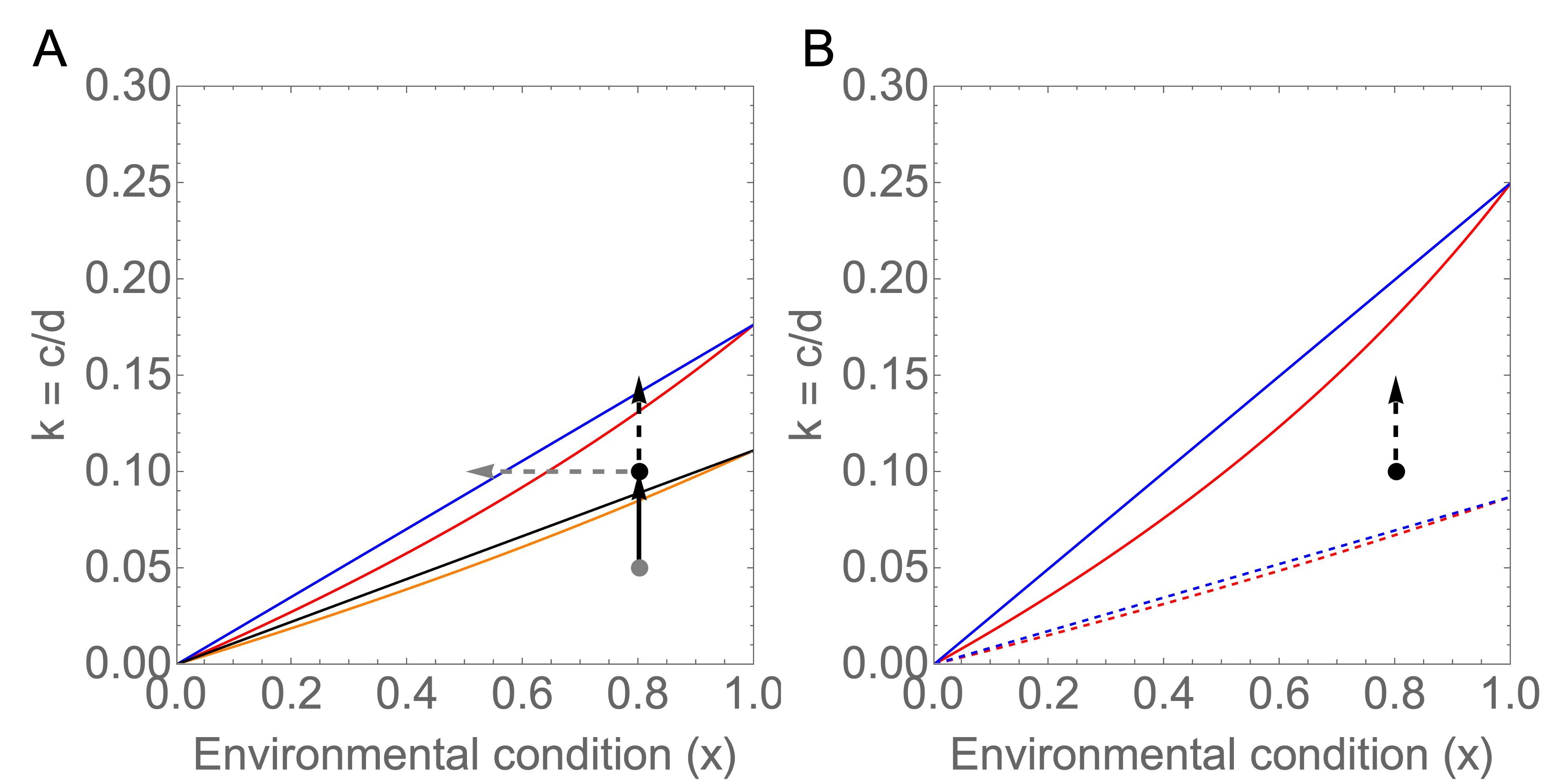
Abstract:
The repeated evolution of avian obligate brood parasitism (OBP) across diverse lineages represents a major evolutionary puzzle. While host-parasite coevolution has been extensively studied, the initial conditions favoring OBP emergence remain unclear. Here, we integrate theoretical modeling, paleoclimate mapping, and phylogenetic comparative analyses to identify the key drivers underlying OBP evolution. Our model shows that rising parental care costs, particularly under environmental stress, may favor the emergence of OBP. However, its persistence requires additional life-history adaptations, including increases in fecundity (egg production). Paleoclimatic data support this framework: OBP origins often followed major climatic upheavals with fixations occurring during subsequently more stable periods. Phylogenetic analyses reveal that OBP is associated with high-mortality ecological traits, such as open-habitat use. We also find increased OBP likelihood in both smaller carnivorous and larger herbivorous/omnivorous species, indicating size-dependent trophic constraints. These results provide a unified framework explaining the recurrent evolution of OBP by linking environmental pressures and life-history trade-offs to this remarkable behavioral adaptation.
Reference: https://doi.org/10.1126/sciadv.adx8063