

Wang Shoujun Leads Delegation on Visits to Kyrgyzstan and Kazakhstan
From September 21 to 25, Wang Shoujun, Executive Vice President of Beijing Normal University (BNU), led a delegation on visits to Kyrgyzstan and Kazakhstan. The delegation visited Kyrgyz-Russian Slavic University (KRSU), Kyrgyz National University named after Jusup Balasagyn (KNU), Kyrgyz State Technical University named after I. Razzakov (KSTU), Bishkek State University (BSU), Al-Farabi Kazakh National University (KazNU), KIMEP University, and Abai Kazakh National Pedagogical University (Abai KazNPU). The delegation also met with the former prime minister of Kyrgyzstan and held meetings with representatives of the Ministry of Science, Higher Education and Innovation of the Kyrgyz Republic, the Embassy of the People's Republic of China in the Kyrgyz Republic, and the Consulate-General of the People’s Republic of China in Almaty. Representatives from the BNU Alumni Association, the Belt and Road School, the Research Center for Computational Communication at the Institute for Advanced Studies, and the Center for Russian Studies accompanied the delegation.
The delegation was warmly received by Sergey Yurievich Volkov, rector of KRSU, and members of the university’s senior leadership team. The two sides discussed student and faculty exchanges and opportunities for cooperation in artificial intelligence, digital humanities, and other fields. During the meeting, they signed a memorandum of understanding on inter-university cooperation.
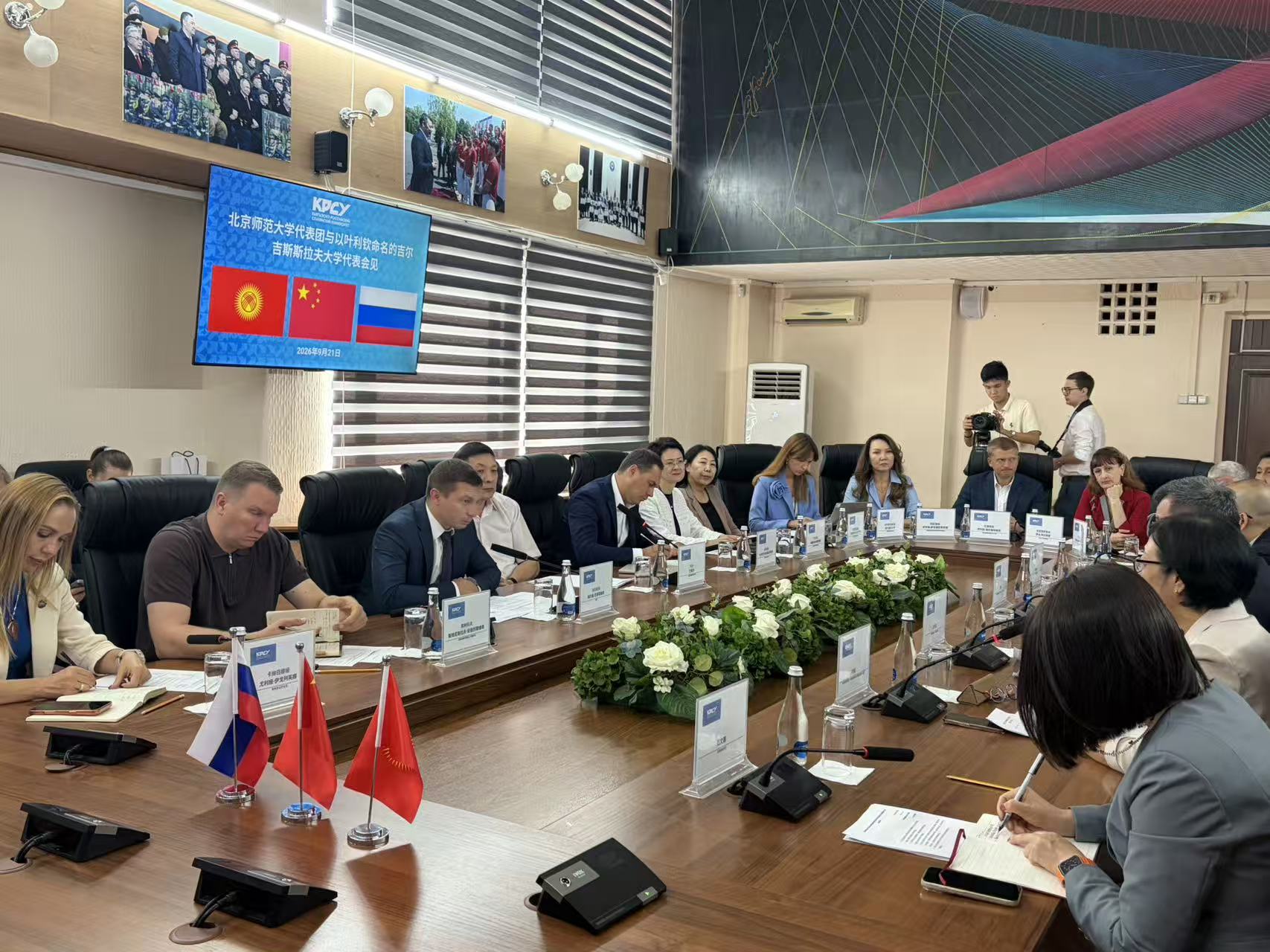
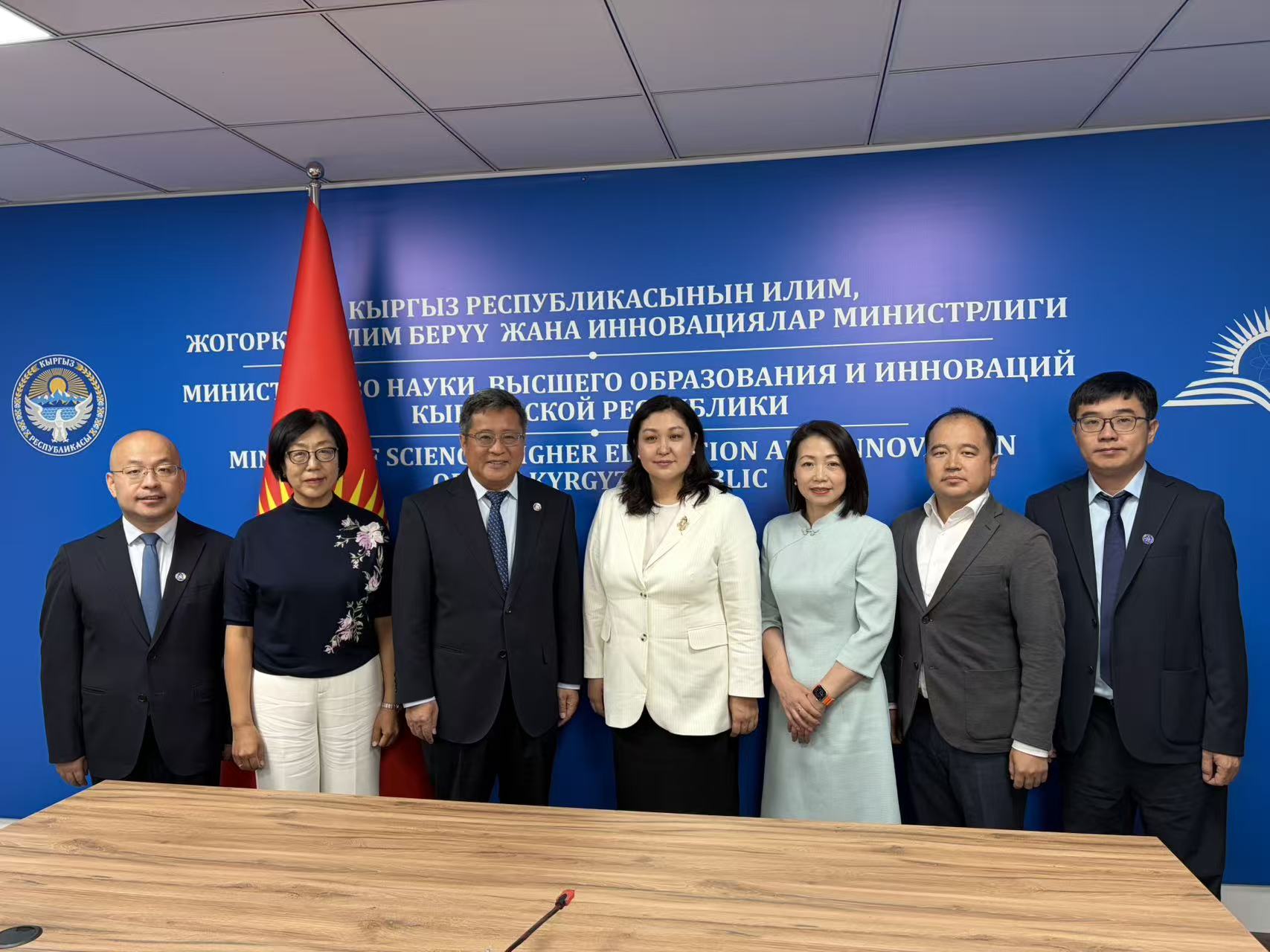
The delegation also met with Gulzat Isamatova, Minister of Science, Higher Education and Innovation of the Kyrgyz Republic. Wang Shoujun introduced BNU’s recent disciplinary development and strategic plans and exchanged views with Isamatova on strengthening cultural and educational exchanges between China and Kyrgyzstan. Isamatova spoke highly of BNU’s achievements and expressed the hope that the two sides would establish practical cooperation in teacher education, international Chinese language education, and the digital transformation of education.
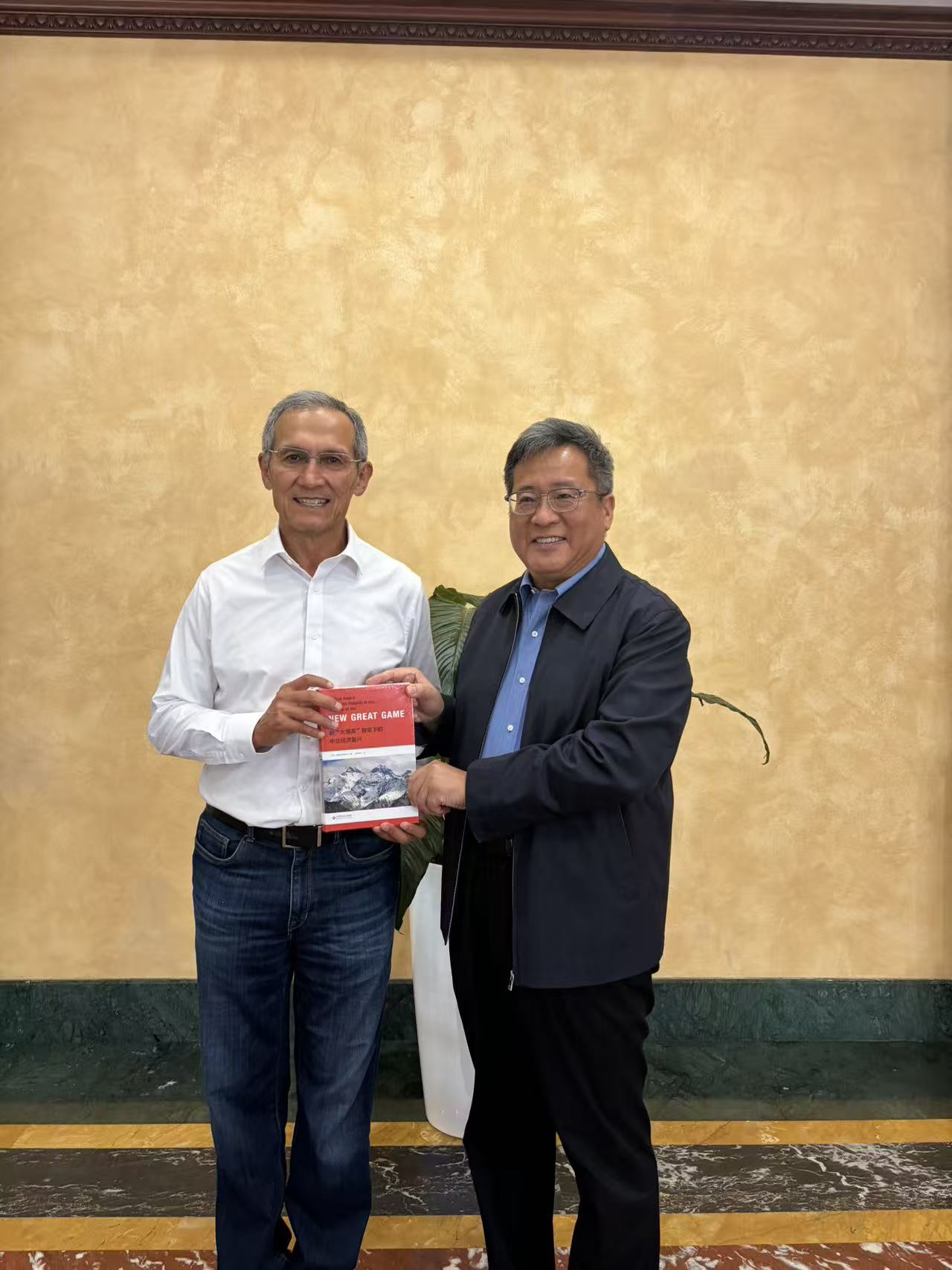
The delegation paid a courtesy call on Djoomart Otorbaev, former prime minister of the Kyrgyz Republic. Wang Shoujun thanked Otorbaev for his contributions to BNU’s development and to the cultivation of high-level talent from countries participating in the Belt and Road Initiative. The two sides discussed preparations for educational exchange activities marking the 35th anniversary of diplomatic relations between China and Kyrgyzstan in 2027, as well as the development of a Central Asian alumni network for BNU’s Belt and Road School. During the meeting, Wang presented Otorbaev with a sample copy of the Chinese translation of his book, Central Asia’s Economic Rebirth in the Shadow of the New Great Game.
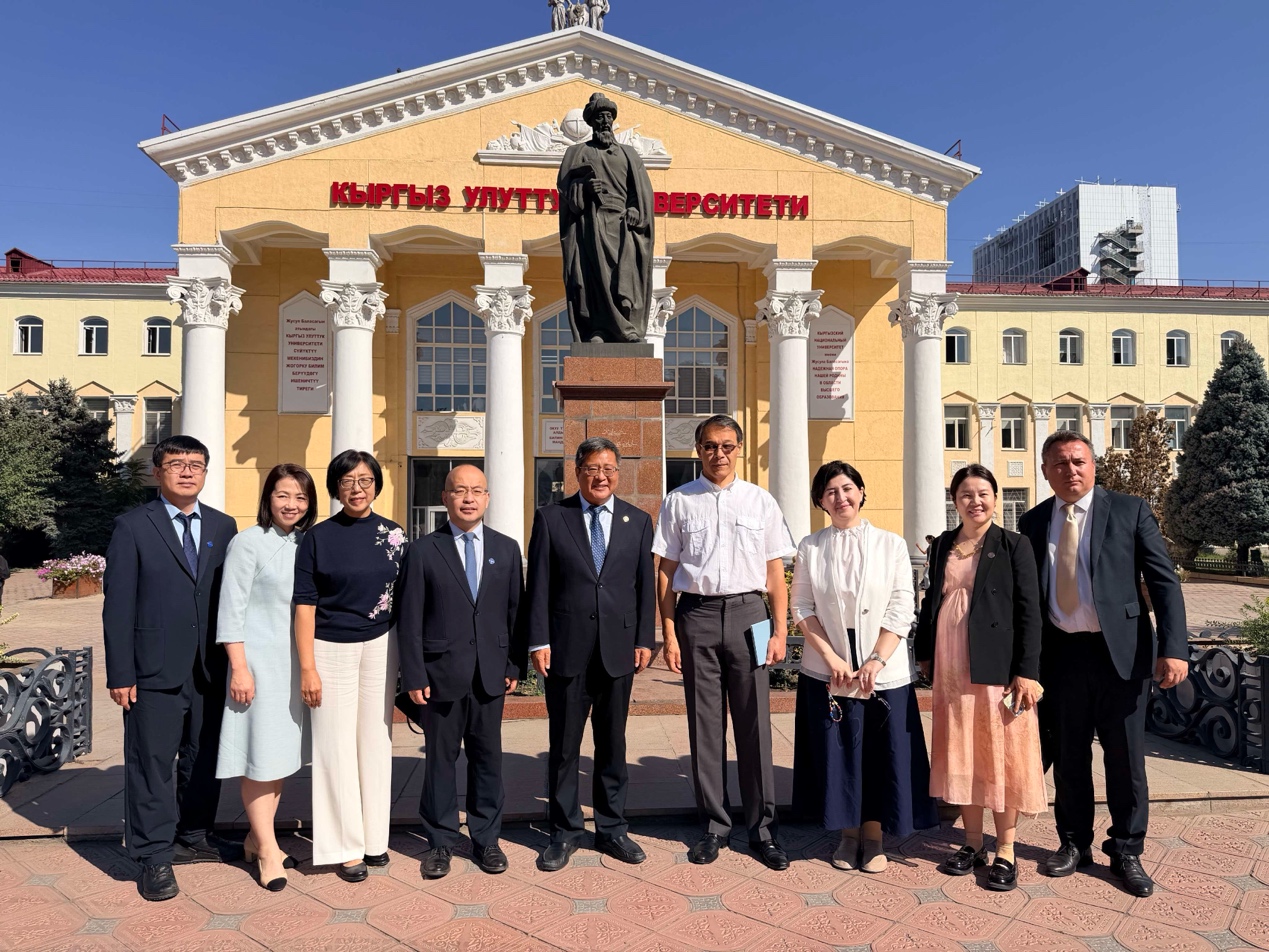
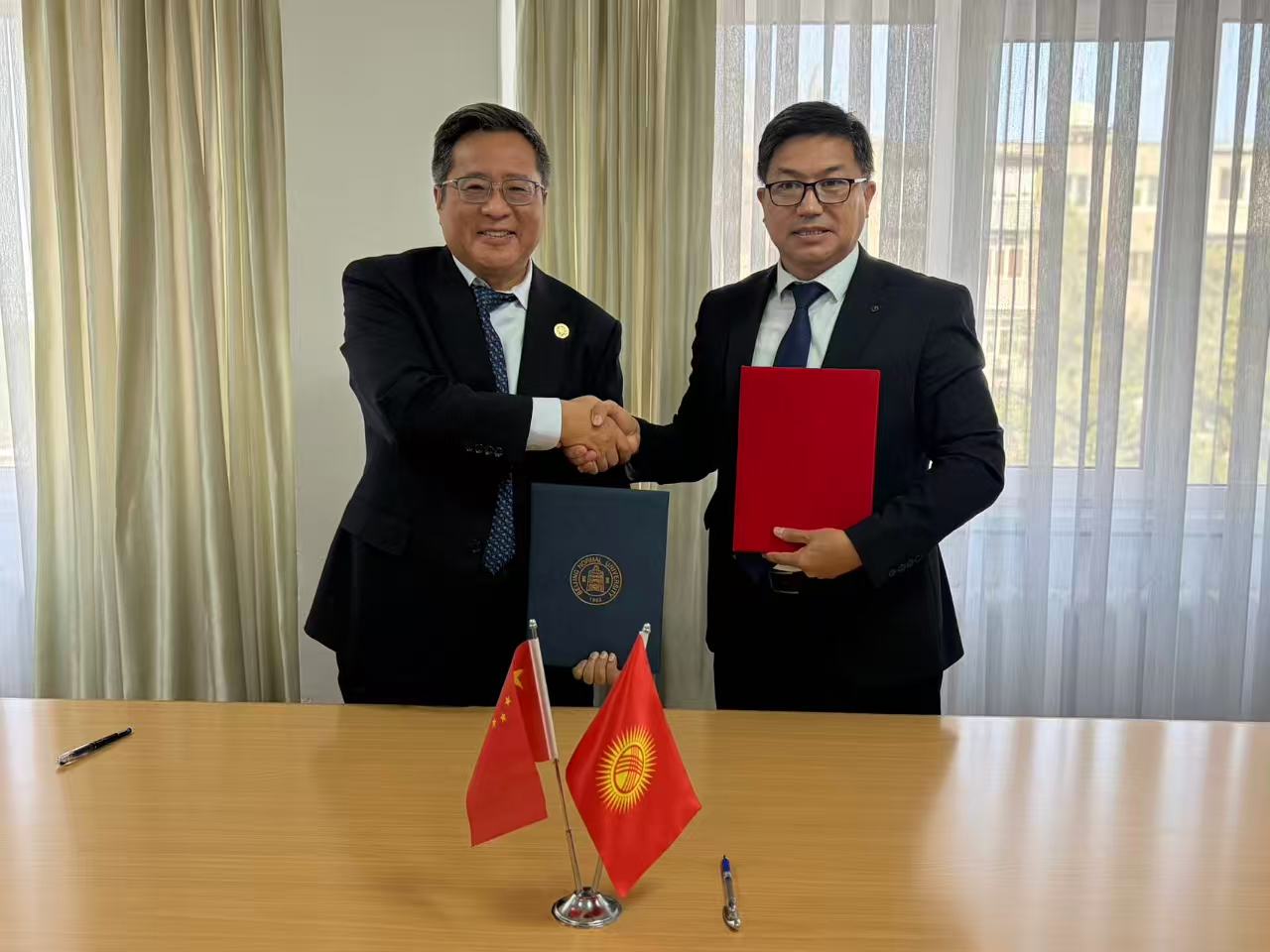
During the visit to KNU, the delegation met with Rector Dogdurbek Chontoev. The two sides exchanged views on student and faculty exchanges, the development of dual-degree programs, and the training of teachers for international Chinese language education. They also signed a memorandum of understanding to advance cooperation between the two universities.
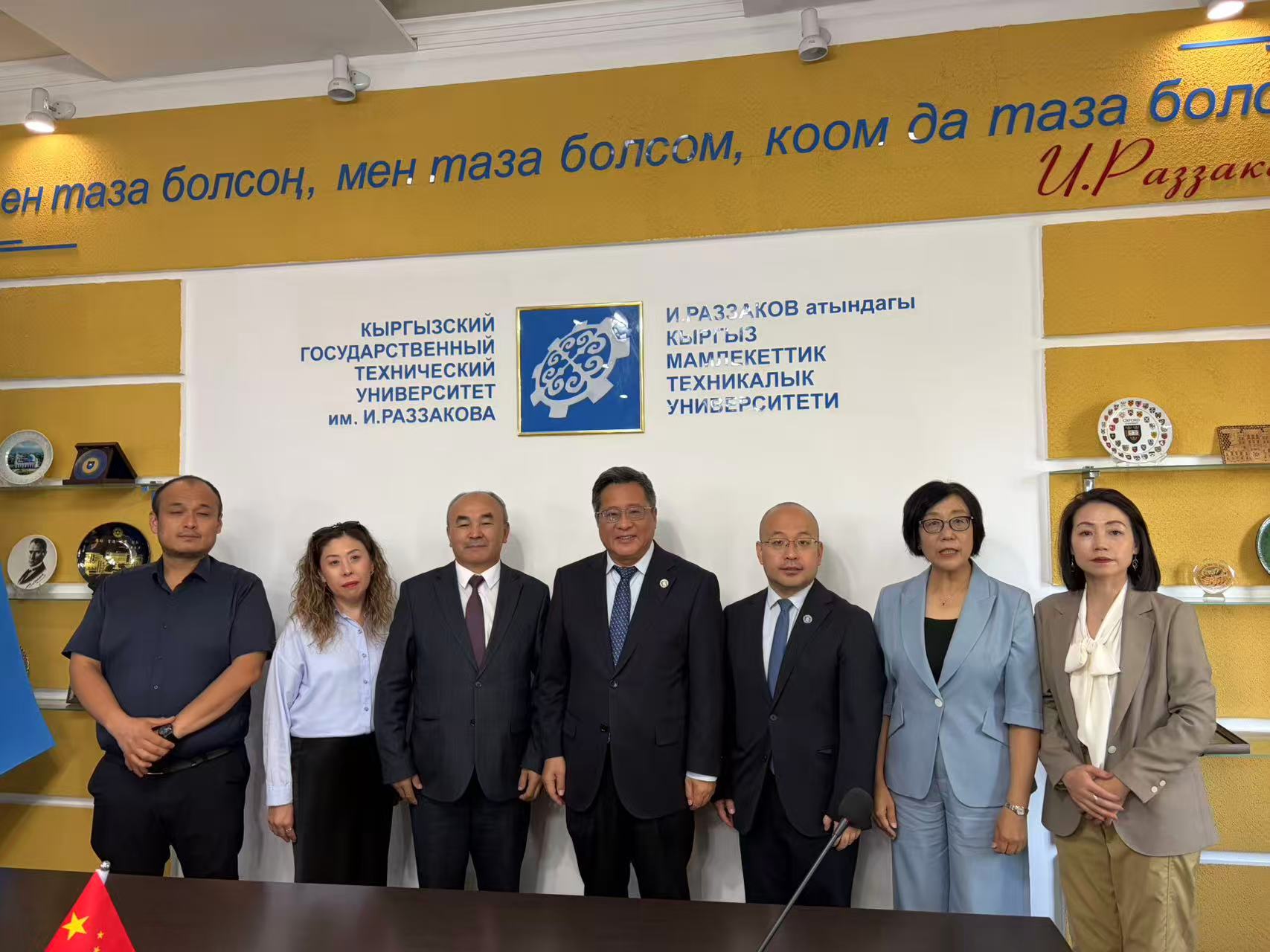
At KSTU, the delegation reviewed the existing cooperation between BNU’s School of Future Design and the host university. Discussions focused on expanding inter-university cooperation, promoting student and faculty exchanges, jointly training talent, and conducting collaborative research. The two sides identified priorities for further cooperation.
Dyldaev Mirlan Muktarovich, rector of BSU, met with the delegation. The two sides exchanged views on potential cooperation in such areas as the joint establishment of an artificial intelligence technology center, the development of Chinese-taught academic programs, and regional and country studies.
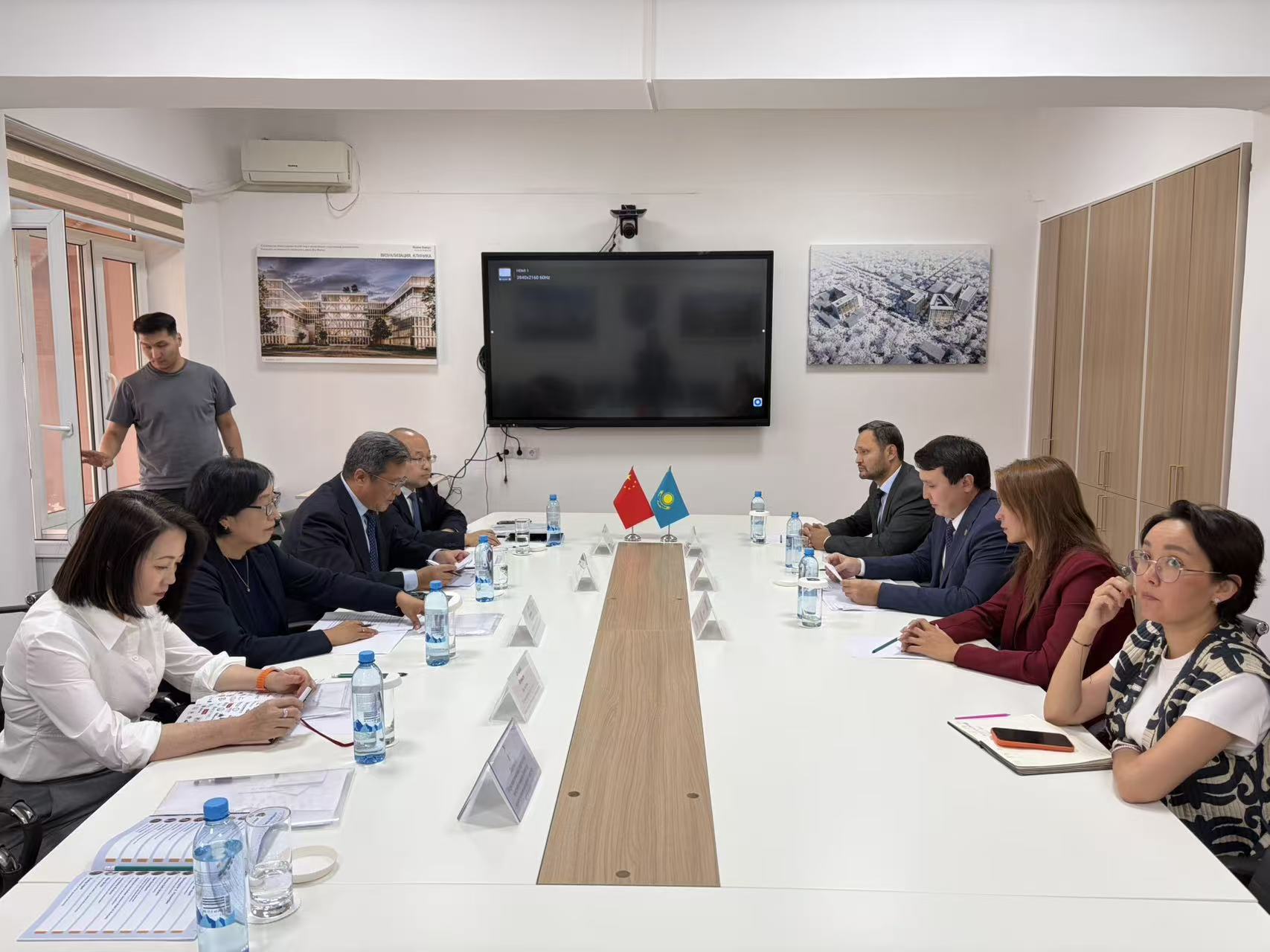
At KazNU, the delegation discussed potential areas of cooperation in light of the two universities’ respective academic strengths and educational characteristics. The two sides plan to promote academic exchanges and research collaboration in Central Asian studies, languages, and culture.
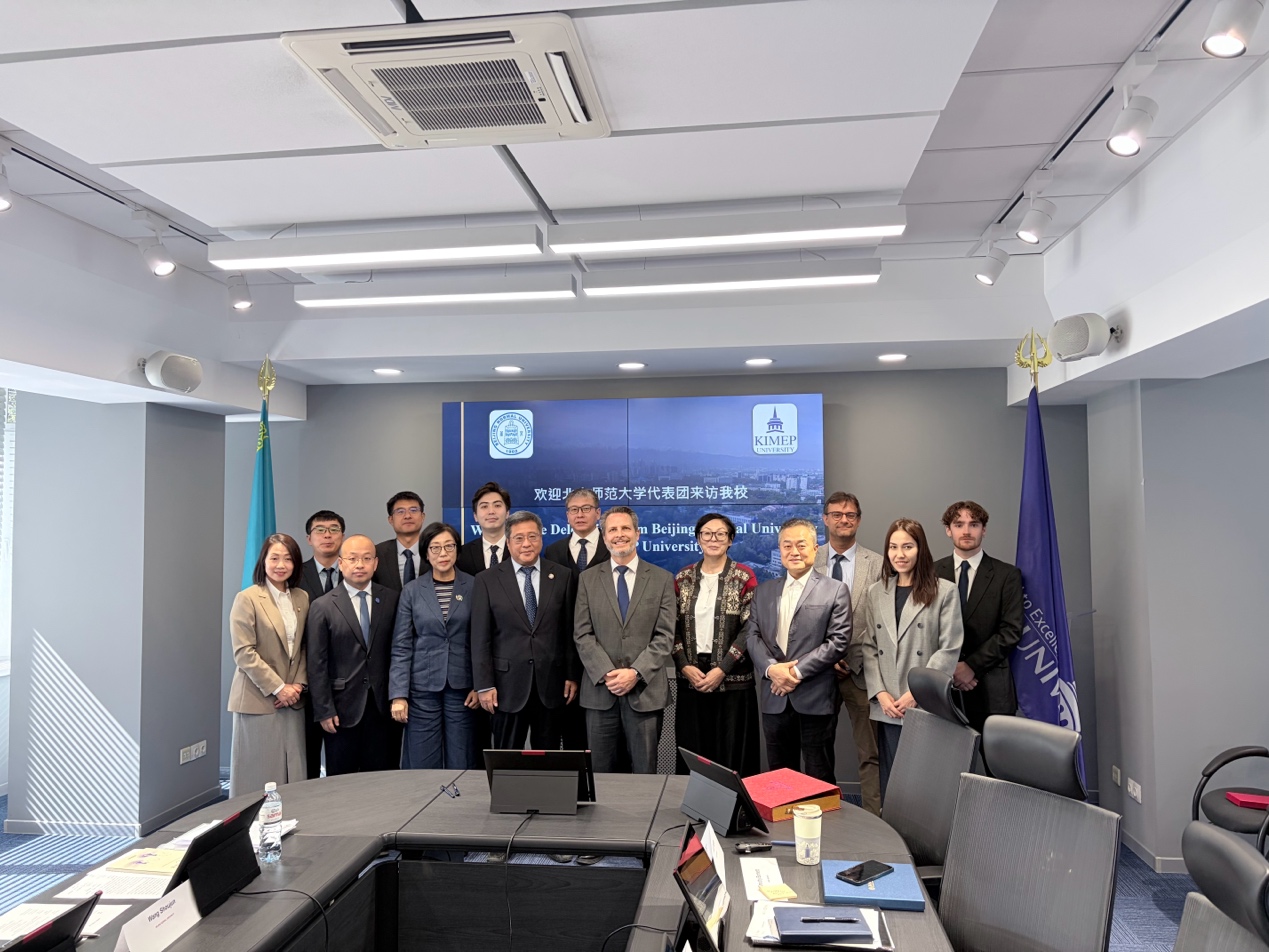
At KIMEP University, the delegation met with Timothy Bernat, Executive Vice President and Provost. The two sides reviewed the achievements of their cooperation since establishing the China-Kazakhstan Belt and Road Research Center in 2018. They agreed to deepen research on Central Asia and the Belt and Road Initiative and explore new areas of cooperation, including AI-driven innovation. During the meeting, the Belt and Road School of BNU and KIMEP University renewed their memorandum of understanding.
The delegation’s final stop was Abai KazNPU, where Vice Rector Narbekova Banu Mukataevna joined the meeting. The two sides held in-depth discussions on dual-degree programs, the development of the Central Asia Institute of the Global Teacher Development Academy, and cooperation in brain science, AI-enabled education, and special education. They signed a memorandum of understanding to further strengthen BNU’s cooperation network in Central Asia.
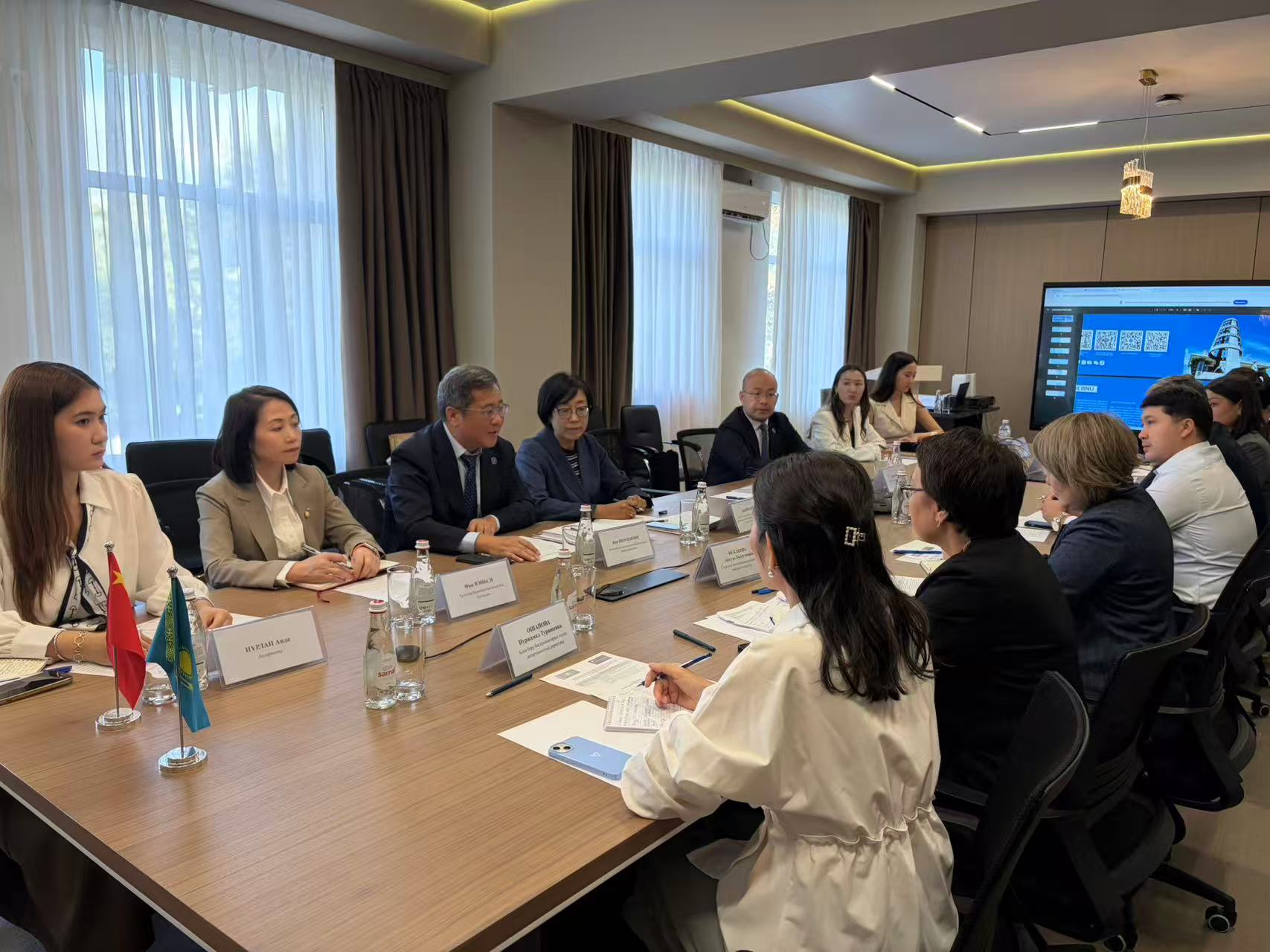
During the visits, Sun Dapeng, Minister-Counselor of the Embassy of the People’s Republic of China in the Kyrgyz Republic, and Huang Xiaomin, Consul for Education at the Consulate General of the People’s Republic of China in Almaty, separately met with the delegation. The delegation briefed them on cooperation and exchanges between BNU and universities in Kyrgyzstan and Kazakhstan, as well as the outcomes of the visit. The participants also exchanged views on leveraging BNU’s academic strengths and further deepening educational cooperation with Central Asian countries.
The visits further consolidated the foundations for cooperation between BNU and universities and educational institutions in Kyrgyzstan and Kazakhstan, and expanded BNU’s network of partnerships with key universities in Central Asia. They also provided fresh impetus for BNU to deepen educational exchanges with Central Asian countries and advance the opening-up of education at a higher level.