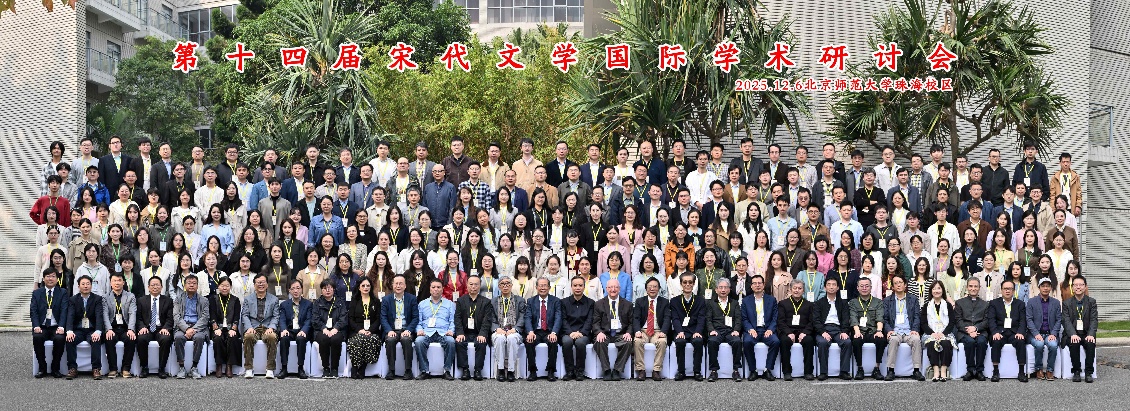

The 14th International Symposium on Song Dynasty Literature was Held at Zhuhai Campus
From December 5 to 8, the 14th Annual Conference of the China Society of Literature of the Song Dynasty and the International Symposium on Song Dynasty Literature were held at Beijing Normal University (BNU) Zhuhai Campus. The event was jointly hosted by the School of Chinese Language and Literature and the Faculty of Arts and Sciences of BNU.
Over 240 experts, scholars, and postgraduate students attended the conference. Participants represented 107 universities, research institutions, publishing houses, and journals from all around the world, encompassing the Chinese Mainland, Hong Kong, Macao, and Taiwan regions, as well as multiple overseas countries.
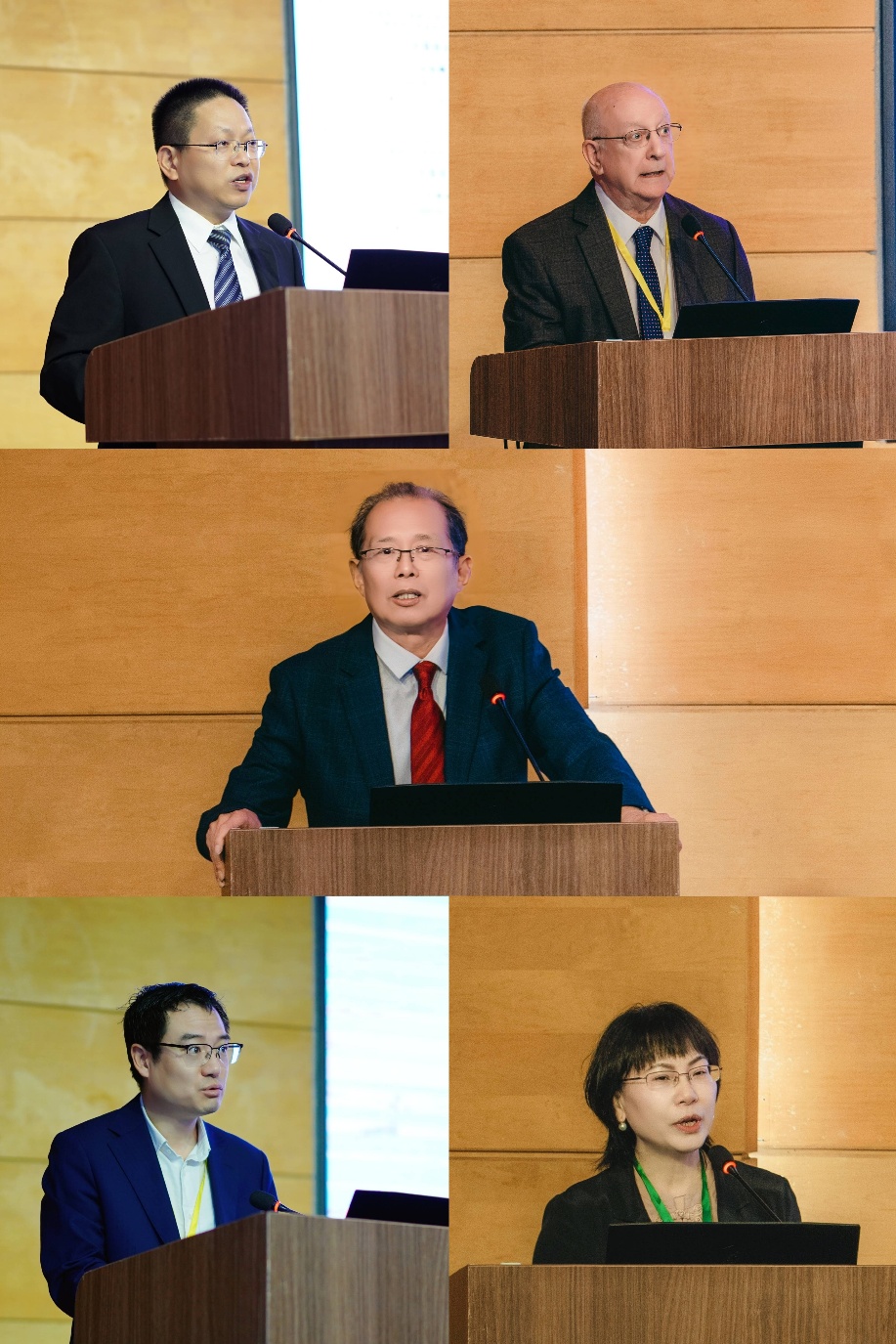
Kang Zhen, Vice President of BNU, extended a warm welcome to all distinguished guests. He reviewed the developmental history and major achievements of the China Society of Literature of the Song Dynasty. He also introduced BNU's continuous efforts in discipline construction and research outcomes within the field of ancient Chinese literature, expressing his anticipation for in-depth exchanges among all participating scholars.

Following this, speeches were delivered successively by several distinguished guests: Wang Zhaopeng, President of the China Society of Literature of the Song Dynasty; Ronald Egan, Professor at Stanford University, USA; Gao Xiaocheng, Deputy Editor-in-Chief of Literary Heritage; Ma Dongyao, Professor at BNU.
The conference featured a total of four thematic forums. Forum 1 included in-depth analysis of the institutional context, deconstruction of textual frameworks, and systematic tracing of poetic origins. Forum 2 was text-based, yet connected literature with institutional and spatial studies. This demonstrated the rich historical depth and contemporary significance of Song Dynasty Literature. Forum 3 was centered on Song Dynasty Literature and its cultural ecosystem. It presented a vivid picture of the integration and interflow between literature, history, and intellectual thought. Forum 4 showcased the potential of the new generation of young scholars, integrating textual analysis, meticulous documentary verification, and historical perspective.

The Thematic Forum
From the afternoon of December 6th to the morning of December 7th, participating scholars were divided into four groups to conduct intensive, in-depth research discussions, effectively promoting profound dialogue and innovation in Song Dynasty Literature studies. Group 1 focused on individual case studies of writers and the historical context of poetry, systematically examining the artistic texture and the logical historical evolution of Song poetry. Group 2 investigated the multi-dimensional dynamics of Song Dynasty Literature, covering aspects such as poetic texts, overseas dissemination, principles of prose composition, and new developments in literary genres. Group 3 broke the traditional boundaries of literary research by integrating perspectives from various dimensions—including geographical landscape, institutional framework, historical change, and lived experience—to deepen interpretations. Group 4 returned to the core nature of literature, gradually delving into areas such as academic thought, the evolution of the lyric form, the formation of documents, and the reception of classics, thereby showcasing the solid academic foundation and research vitality of the field.
Following the practice of the previous year, the conference continued to host the Postgraduate Student Forum, involving 60 Master's and Doctoral candidates. The forum employed a dual review mechanism of "Peer Review + Expert Commentary", fostering a rigorous yet supportive academic environment. Students explored Song Dynasty Literature across eight major themes, including spiritual world, artistic interdisciplinarity, spatial memory, ideological evolution, political discourse, poetic techniques, textual verification, and dissemination and reception. This multi-dimensional deep dive into the field fully demonstrated the research vitality of the young scholars. Their work is characterized by a foundation of meticulous documentation, the integration of diverse theories and methods, and a consistent effort to expand interpretive horizons.
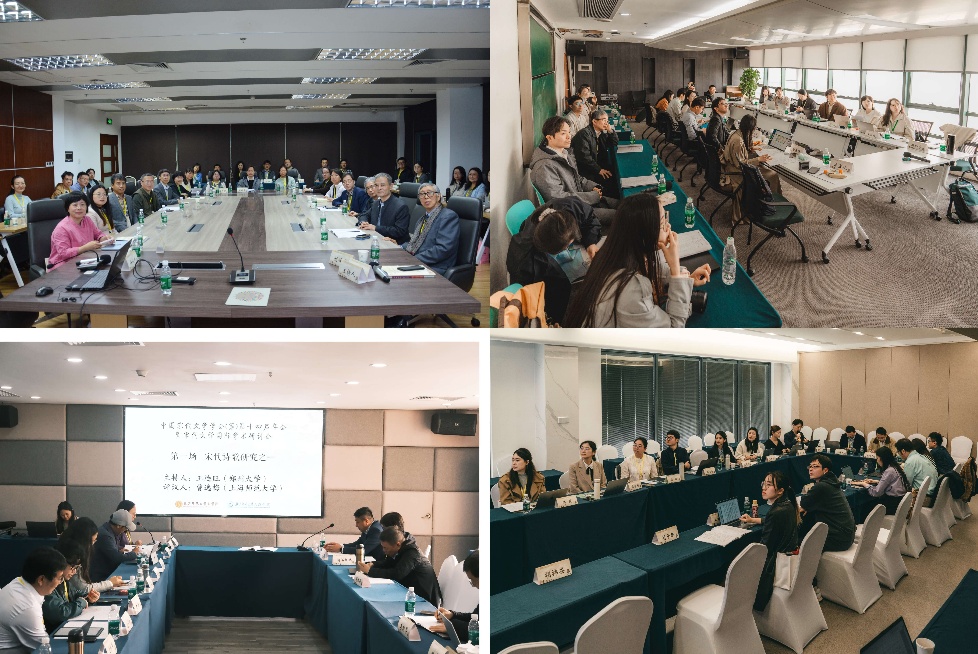
The parallel panel sessions
The conference concluded with a Closing Ceremony, which included the Awards Presentation for Outstanding Postgraduate Papers. Wang Zhaopeng, Ronald Egan, and other distinguished guests presented certificates and prizes to the award-winning students.

Awards ceremony at the Postgraduate Forum
The conference emphasized the importance of intergenerational academic dialogue. Through various types of presentations, exchanges, and critical discussions, the event successfully promoted the academic inheritance and talent cultivation within the field of Song Dynasty Literature studies.