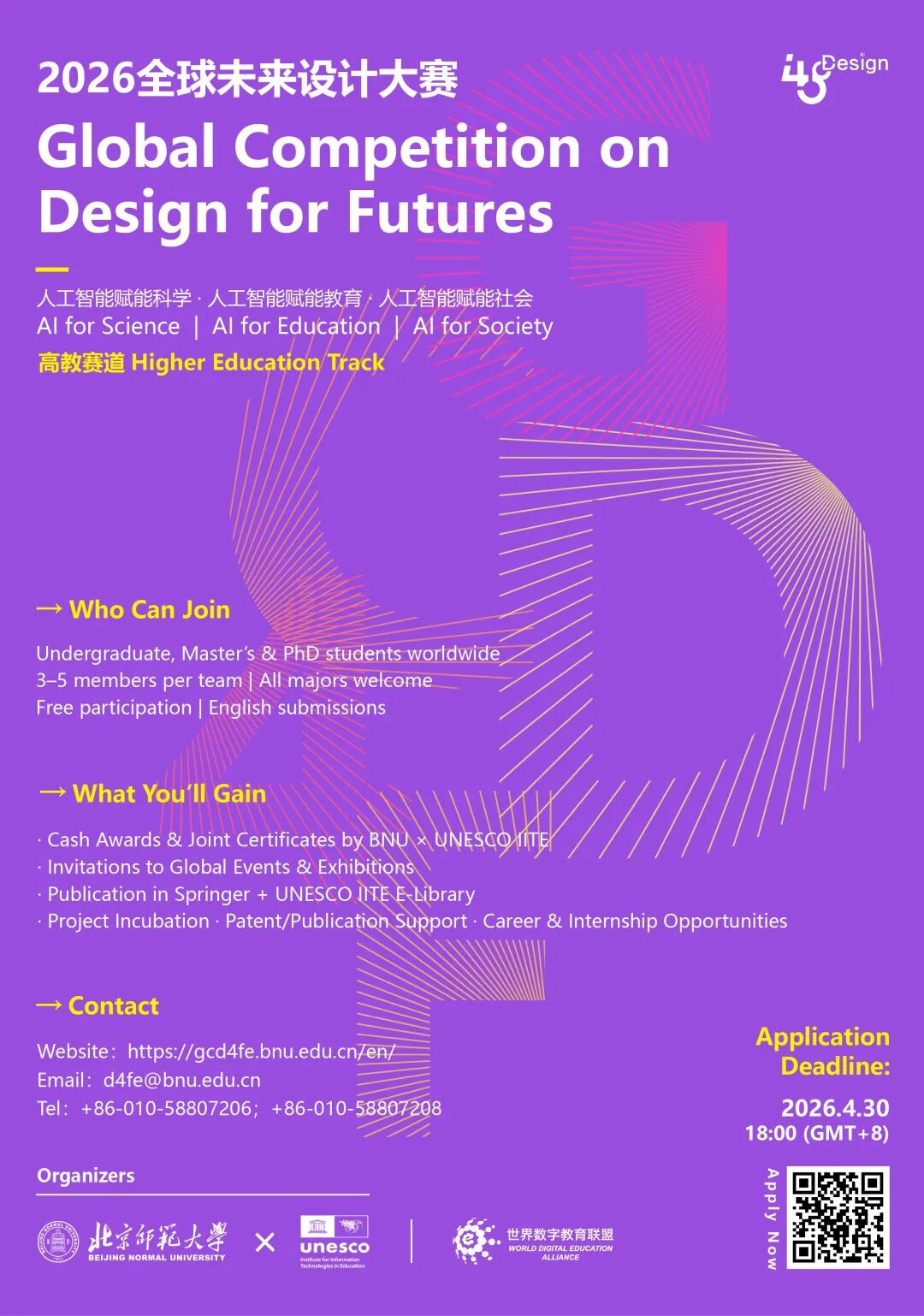

[Notice] Higher Education Track of 2026 Global Competition on Design for Futures Officially Launches: Design for Futures, Creativity Without Limits
When artificial intelligence meets sustainable development, and creativity engages with global challenges, a new journey toward the future begins. Starting January 15, 2026, the Higher Education Track of the Global Competition on Design for Futures (GCD4F) invites participants worldwide to embark on an innovative voyage to reimagine and reshape the future.
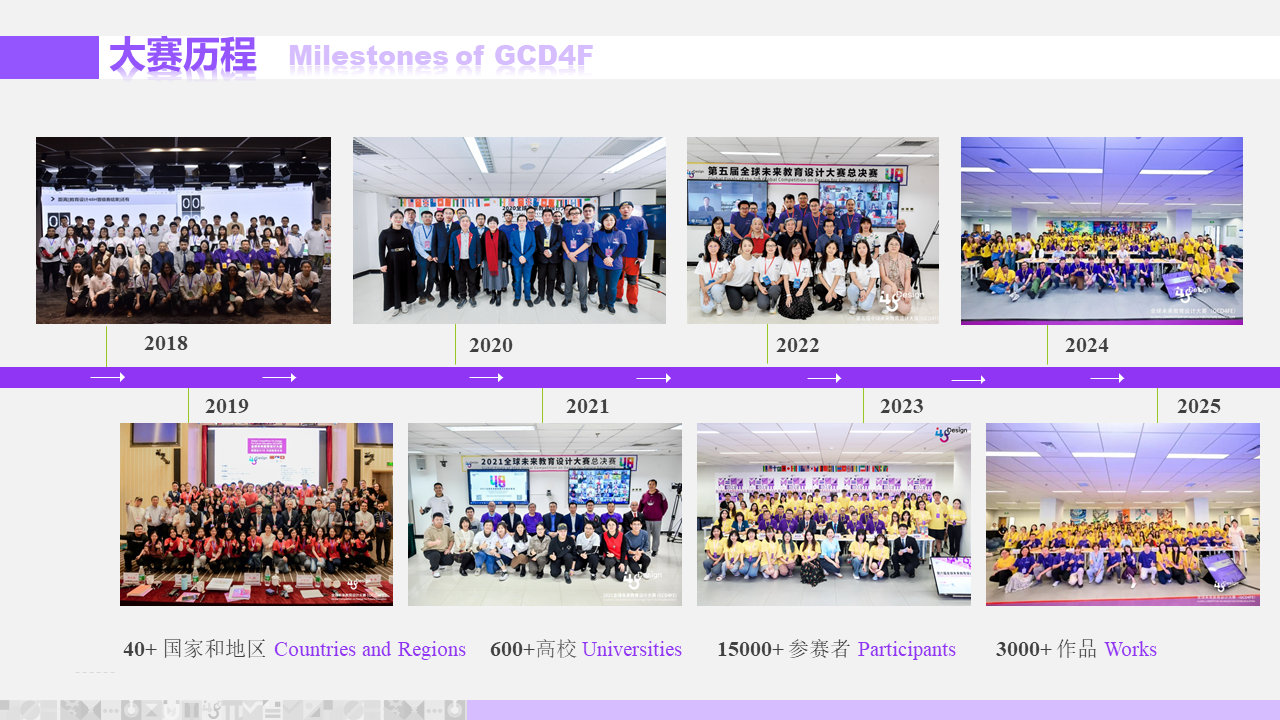
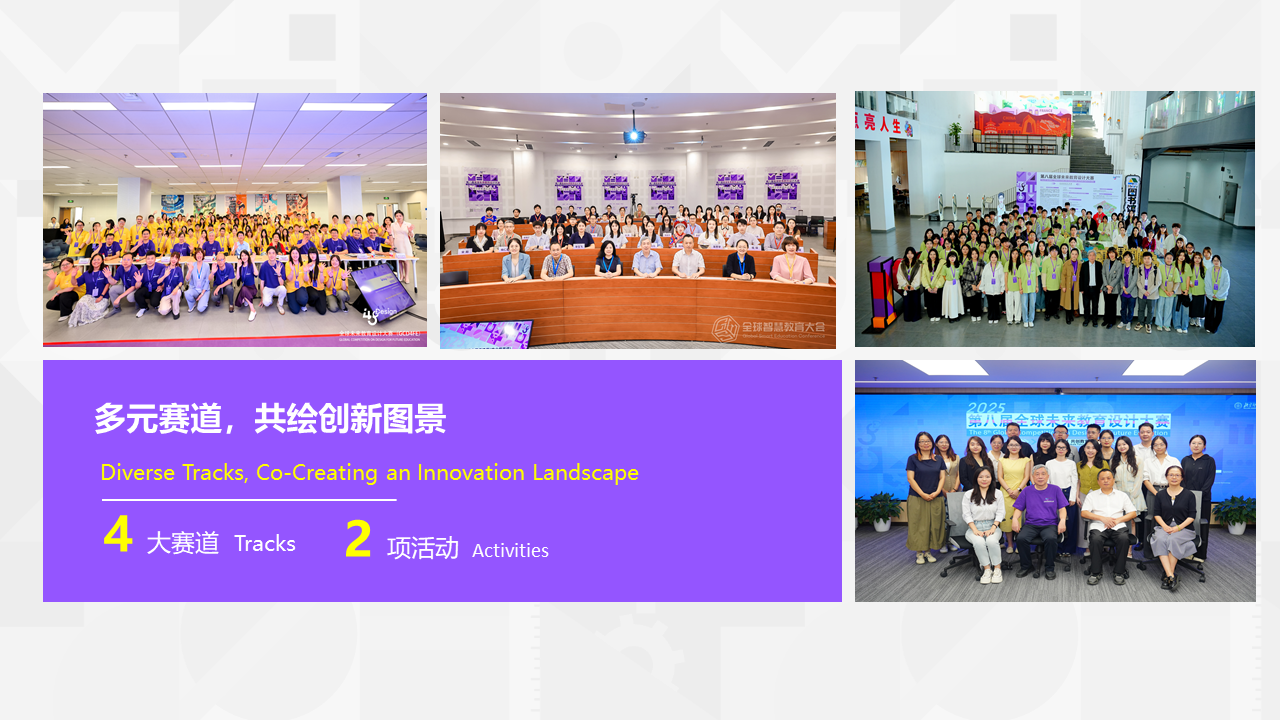
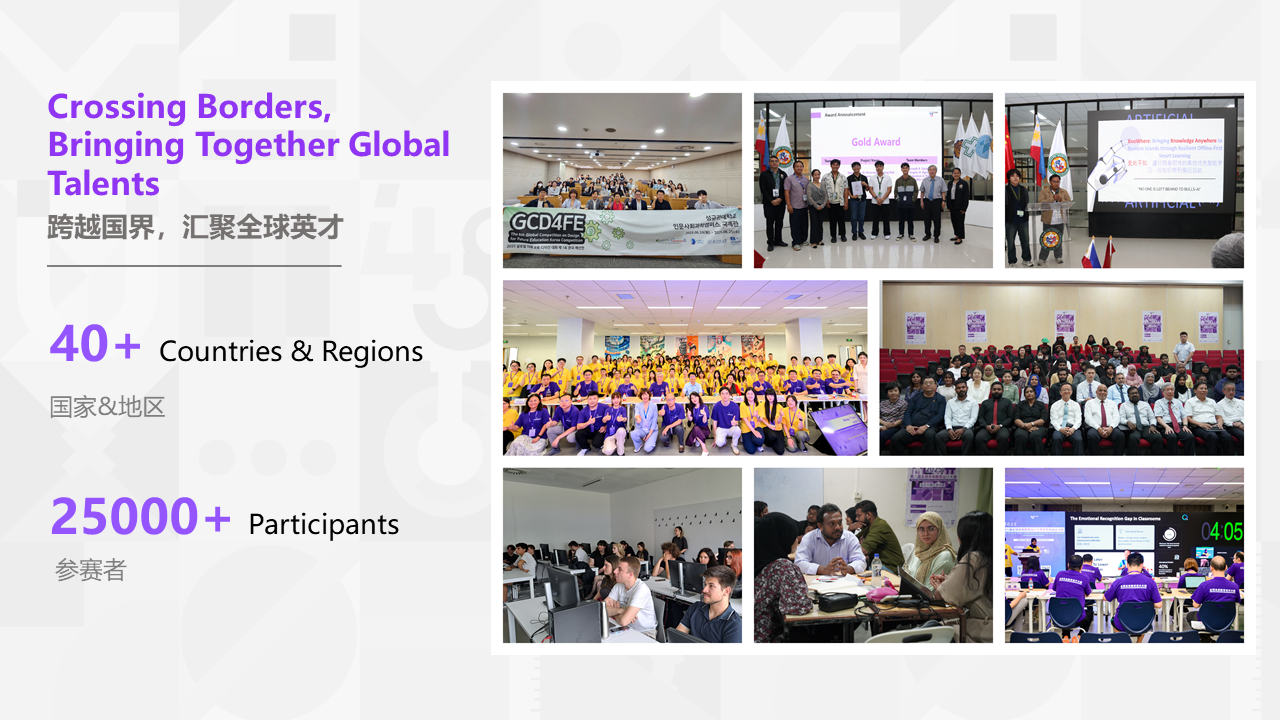
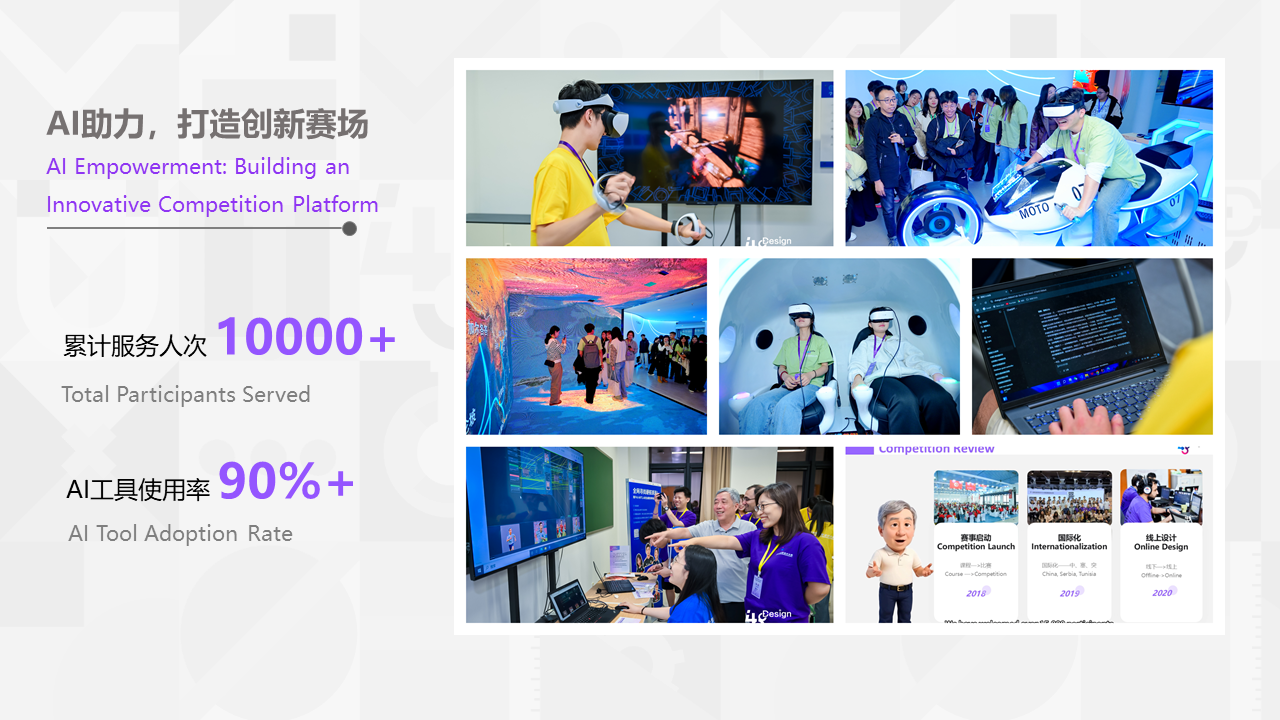
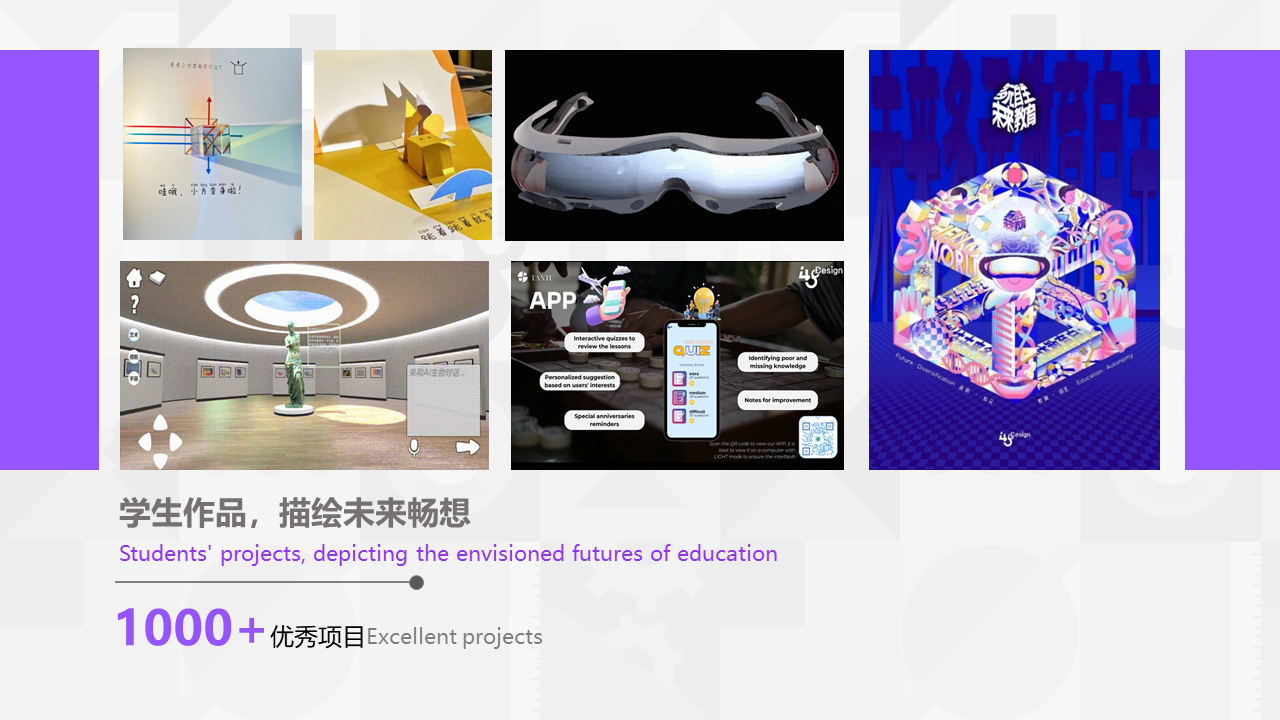
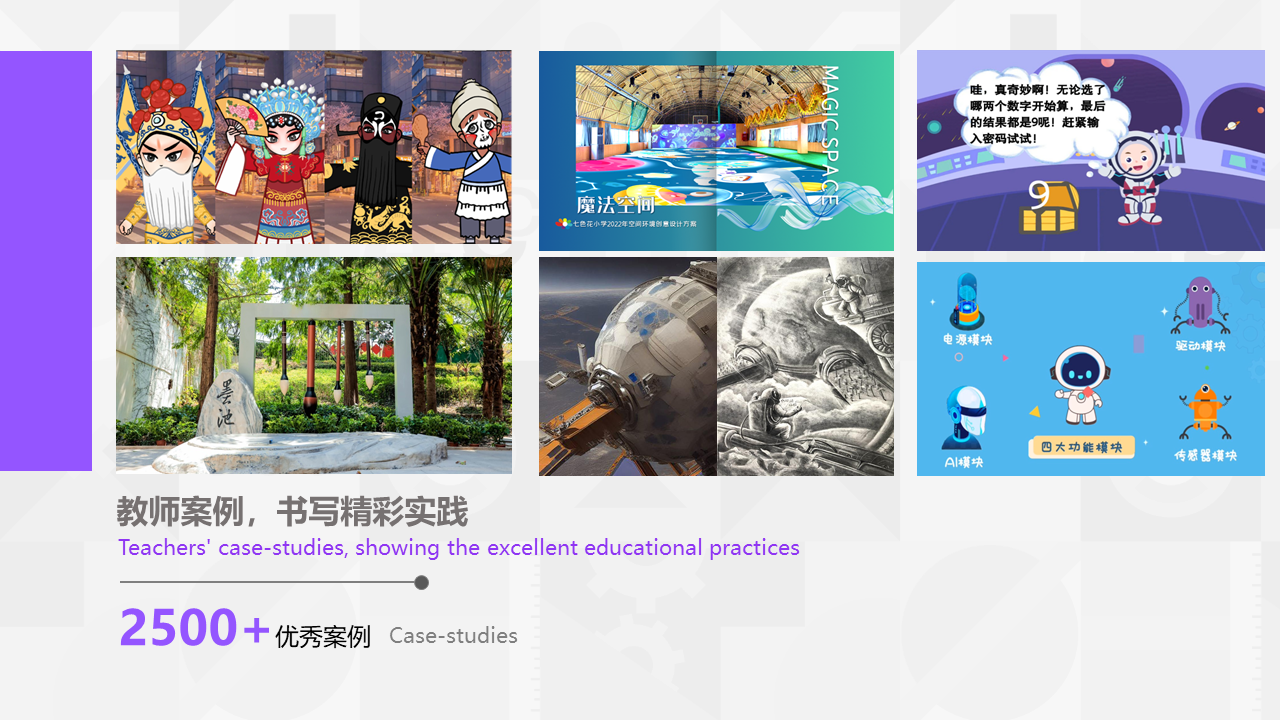
Formerly known as the Global Competition on Design for Future Education, the event has evolved beyond education to embrace a broader future-oriented vision. Co-organized by Beijing Normal University and the UNESCO Institute for Information Technologies in Education (UNESCO IITE), the international competition has completed eight successful editions. To date, it has attracted more than 25,000 participants from over 40 countries and regions and has generated more than 3,000 innovative solutions. As an annual flagship event of the World Digital Education Alliance (WDEA), the competition will be officially upgraded in 2026 as the Global Competition on Design for Futures. Three major tracks—Higher Education, K–12 Teacher, and Vocational Education—will be established. Centered on design thinking, the competition will explore the dynamic relationships among humanity, science, technology, and society in the era of artificial intelligence.
Three Major Themes: AI Empowering a Sustainable Future
The competition features three themes, encouraging participants to develop innovative, AI-driven solutions for the Sustainable Development Goals (SDGs).
1.AI for Science
Create cross-disciplinary research paradigms powered by AI, developing new platforms, methods, and collaboration models to accelerate scientific discovery across climate science, pharmaceutical R&D, sustainable materials, and energy innovation.
2.AI for Education
Explore an AI-driven future of inclusive and equitable quality education for all—by enhancing personality development, transforming teaching and assessment, empowering people with special challenges, and integrating a focus on education for health and well-being.
3.AI for Society
Envision a more resilient, equitable, and human-centered society empowered by AI—advancing mental health and well-being, promoting sustainable urban management, strengthening judicial fairness, and fostering civic participation.
Participation Guide: Your “Innovation Arena” Is Ready
1.Participants(Higher Education Track)
The competition is open to university students worldwide, including undergraduate and postgraduate students (including master’s and PhD students), from all academic disciplines, with no geographical restrictions.
Register individually first, then form a team through the official website. Final participation must be in teams of 3–5 members.
Cross-national, cross-institutional, and interdisciplinary teams are encouraged; it is recommended that at least one team member be fluent in English
2.Competition Schedule
(1) Initial Phase (Online)
January 15 – April 30, 2026: Registration, team formation, and submission of design proposals
May 1 – May 31, 2026: Collaborative team design and submission of initial entries
Submission requirements: a 5-minute project video and a design report document
Online training sessions, expert lectures, and showcases of outstanding projects will be held during this Phase
(2) Regional Finals Phase (Online/Offline)
June – July 2026: Further refinement of works and participation in regional finals
Submission of updated 5-minute video, design report, and presentation slides (PPT)
Each region will select at least one winning team to advance to the Global Finals
(3) Global Finals Phase (Offline)
October 2026: Participation in the Global Finals
Submission of updated 5-minute video, design report, presentation slides (PPT), and poster
Teams will compete for Gold, Silver, and Bronze Awards, as well as multiple Excellence Awards
Guiding Principles: Ideas That Shape the Future
The Voice of Students: We invite participants to be thinkers, critics, and advocates of change, not merely executors.
The Design Lens:Design is an integrative methodology—a powerful way of thinking—that can help transform abstract ideas into concrete, feasible, and compelling solutions.
AI Involvement:We encourage the creative participation of AI by deeply integrating it into the design process.
Regional Representation:we aim to ensure the meaningful representation of voices and perspectives from diverse geographical regions, cultural backgrounds, and stages of development around the world.
Diversity:Diversity is reflected not only in the varied backgrounds of participants, but also in the diversity of topics and solutions.
Benefits: Transforming Ideas into Reality
Implementation Support: Prize money for winning teams to help implement their solutions; All participants advancing to the Regional Finals or the Global Finals will be awarded certificates.
Publication and Dissemination: Inclusion in the competition case collection published by Springer, showing exemplary cases worldwide, and the UNESCO IITE E-Library. Opportunities for further recognition, including potential patents, publications, or intellectual property development.
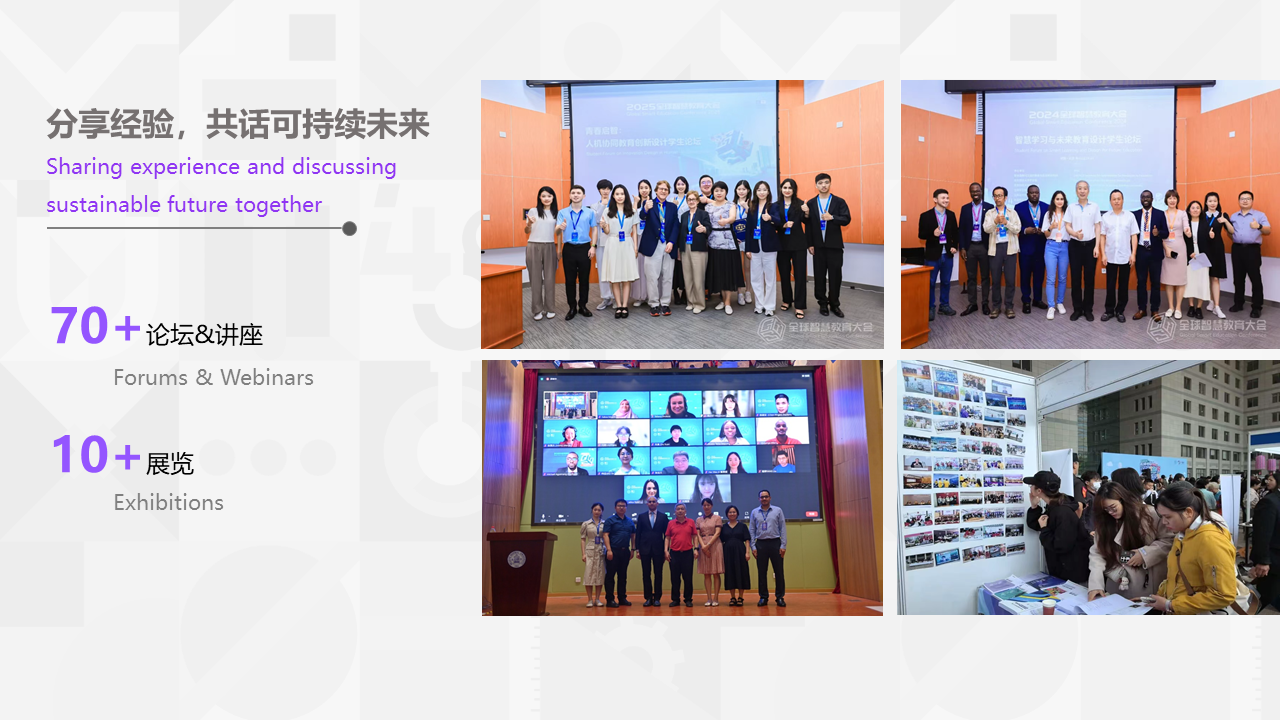
International Exchange: Participate in activities related to the World Digital Education Alliance (WDEA) and conferences hosted by Beijing Normal University, such as the 2026 Global Smart Education Conference etc.
Career Development: Access to the UNESCO AIED youth talent program, recommendation letters, and internship opportunities.
No Fees: The competition is free of charge.
Registration: Join the Journey Toward the Future
Scan the QR code to log in to the official competition website and register to participate.
Deadline for Registration and Team building: April 30, 2026, 18:00 (GMT+8).
Competition Website: http://gcd4fe.bnu.edu.cn/

Looking Back: Growth Witnessed Through Data