

Global Sustainable Development Congress Opens and Smart Learning Institute at Beijing Normal University Releases Report on AI Practices at 100 Universities
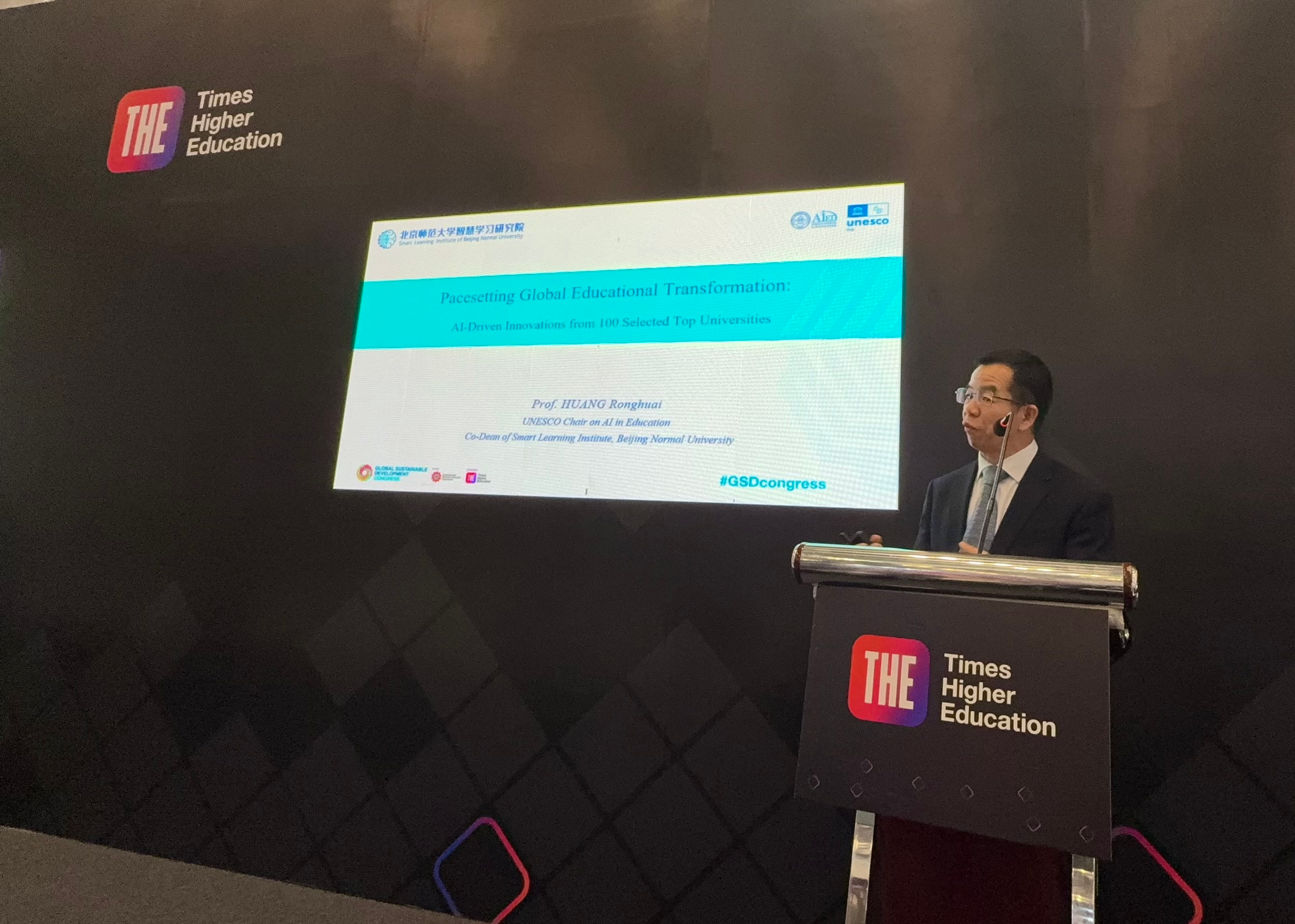
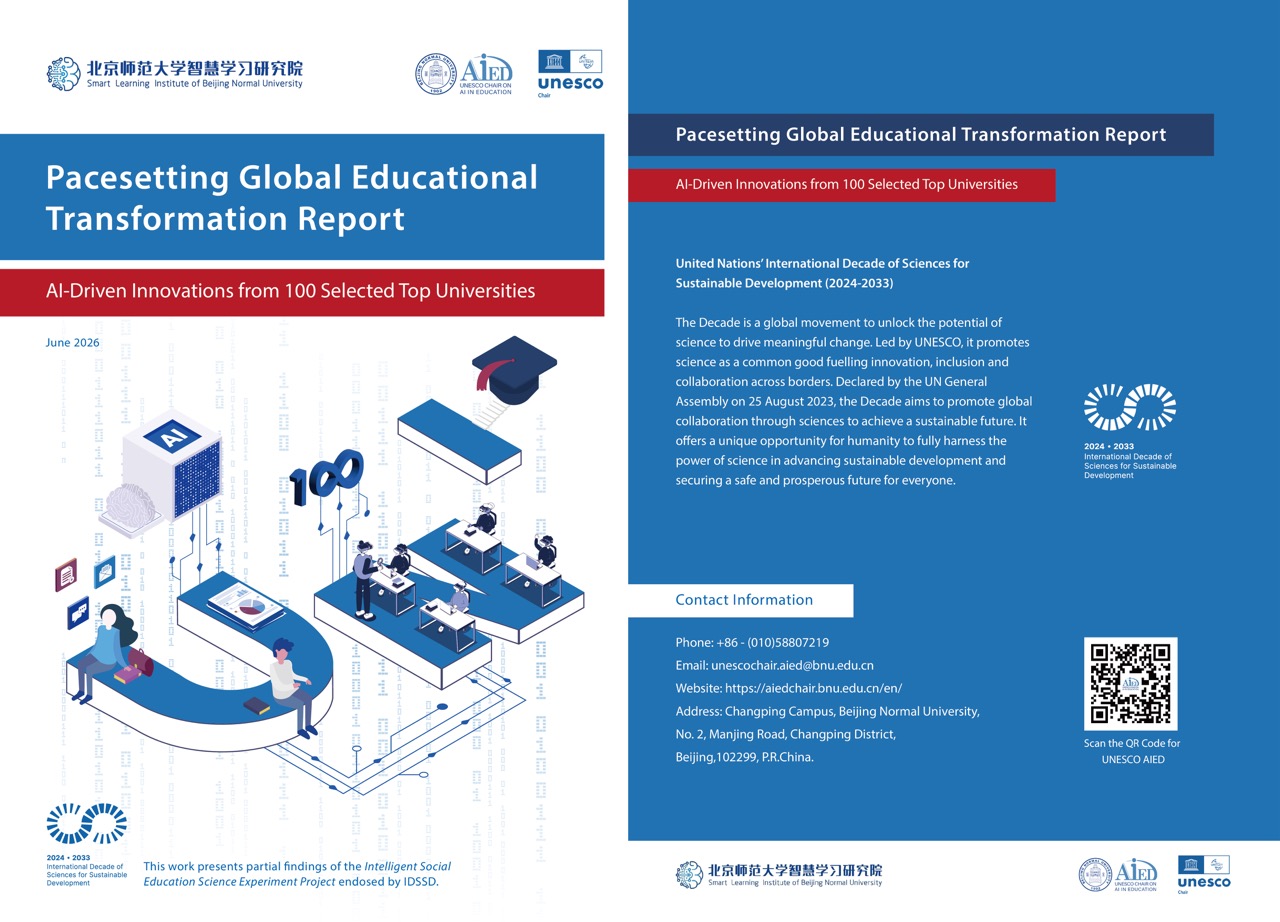
On June 23, Huang Ronghuai, Co-Dean of the Smart Learning Institute at Beijing Normal University and UNESCO Chair on AI in Education, released the latest research report, Pacesetting Global Educational Transformation Report: AI-Driven Innovations from 100 Selected Top Universities, at the Global Sustainable Development Congress 2026 (GSDC 2026) in Jakarta, Indonesia. Later that afternoon, he joined a congress roundtable to share Chinese approaches to AI governance in higher education and discuss how such governance can be put into practice.
A Two-Year, Cross-Continental Study: Building an Analytical Framework for AI Transformation in Higher Education
Artificial intelligence is accelerating systemic change in higher education, placing universities worldwide at a critical point as they redefine their development models and core missions. To better understand how leading universities are adapting to AI, a research team from BNU and the UNESCO Chair on AI in Education conducted a long-term, large-scale and interdisciplinary evidence-informed study of 100 universities across six continents and 30 countries and regions through the Intelligent Social Experiment project.
Drawing on five major global ranking systems - Times Higher Education (THE), QS World University Rankings (QS), U.S. News & World Report (U.S. News), Academic Ranking of World Universities (ARWU), and Center for World University Rankings (CWUR) - the team selected 73 universities ranked among the world’s top 100. To make the sample more inclusive and globally representative, it also included 27 regionally distinctive and innovative institutions from the Global South, including Africa, Latin America and Southeast Asia. Based on publicly available information from the 100 universities, the researchers identified and organized more than 1,400 AI-related initiatives and developed a ten-dimensional analytical framework across three areas of transformation: teaching and talent development, research and knowledge creation, and social engagement and cultural heritage.
Three Trends in AI Transformation Across Global Higher Education
The report finds that universities around the world are pursuing AI transformation through different regional pathways: North America is largely market-driven; Europe emphasizes policy coordination; Asia is driven mainly by government leadership; Oceania shows a more balanced model; Latin America relies on international cooperation and public investment; and Africa is developing locally responsive capabilities despite resource constraints.
Based on these findings, global higher education is moving from small-scale, isolated AI pilots toward institution-wide digital transformation anchored in human-centered values. The report identifies three major trends. First, in teaching and learning, leading universities are redesigning curricula around real-world problems, using digital education resources and human-AI collaboration to reimagine future learning spaces, create interdisciplinary pathways for talent development, and cultivate versatile graduates who can thrive in the AI era and sustain lifelong career development. Second, in research, leading universities are investing in AI infrastructure and working with global technology companies to accelerate scientific innovation. They are using AI for Science to enable interdisciplinary breakthroughs while developing responsible AI governance to ensure that technology serves the public good and remains aligned with the public interest. Third, in service to society, leading universities are becoming important sources of leading AI companies, cutting-edge research and AI policy proposals. By cultivating AI innovators and entrepreneurs and supporting inclusive economic and social development, they are increasingly becoming key actors in creating public value, driving social innovation and addressing complex social challenges.
Four Pathways for AI Transformation in Higher Education
The report proposes actions for AI-enabled institutional transformation in four priority areas. First, universities should redefine teaching and learning by strengthening AI literacy and future-ready competencies among faculty and students, building personalized and flexible learning ecosystems, and creating stronger links between talent development and industry needs. Second, they should advance human-AI collaborative research and knowledge production by improving responsible AI research governance, building interdisciplinary innovation platforms, sharing research infrastructure and expanding multi-stakeholder research cooperation. Third, they should deepen social engagement and cultural preservation by promoting digital inclusion and educational equity, participating actively in policy discussions, and supporting regional educational cooperation and cultural sustainability. Fourth, they should strengthen their internal capacity for AI transformation by establishing university-level AI strategy and governance systems, offering AI capacity building for all faculty and staff, and investing in sustainable, data-driven infrastructure. The report stresses that each university should develop a transformation pathway suited to its own mission, campus culture and regional context.
At the launch, Huang called on universities, policymakers, researchers and industry organizations worldwide to establish regular mechanisms for dialogue and collaboration and to work together toward responsible and inclusive AI-enabled transformation in education. He said the two-year comparative study aims to create a global platform for mutual learning in education and to help regional innovations in smart education move from experimentation to wider adoption.
Roundtable Discussion: Sharing China’s Practices in AI Governance
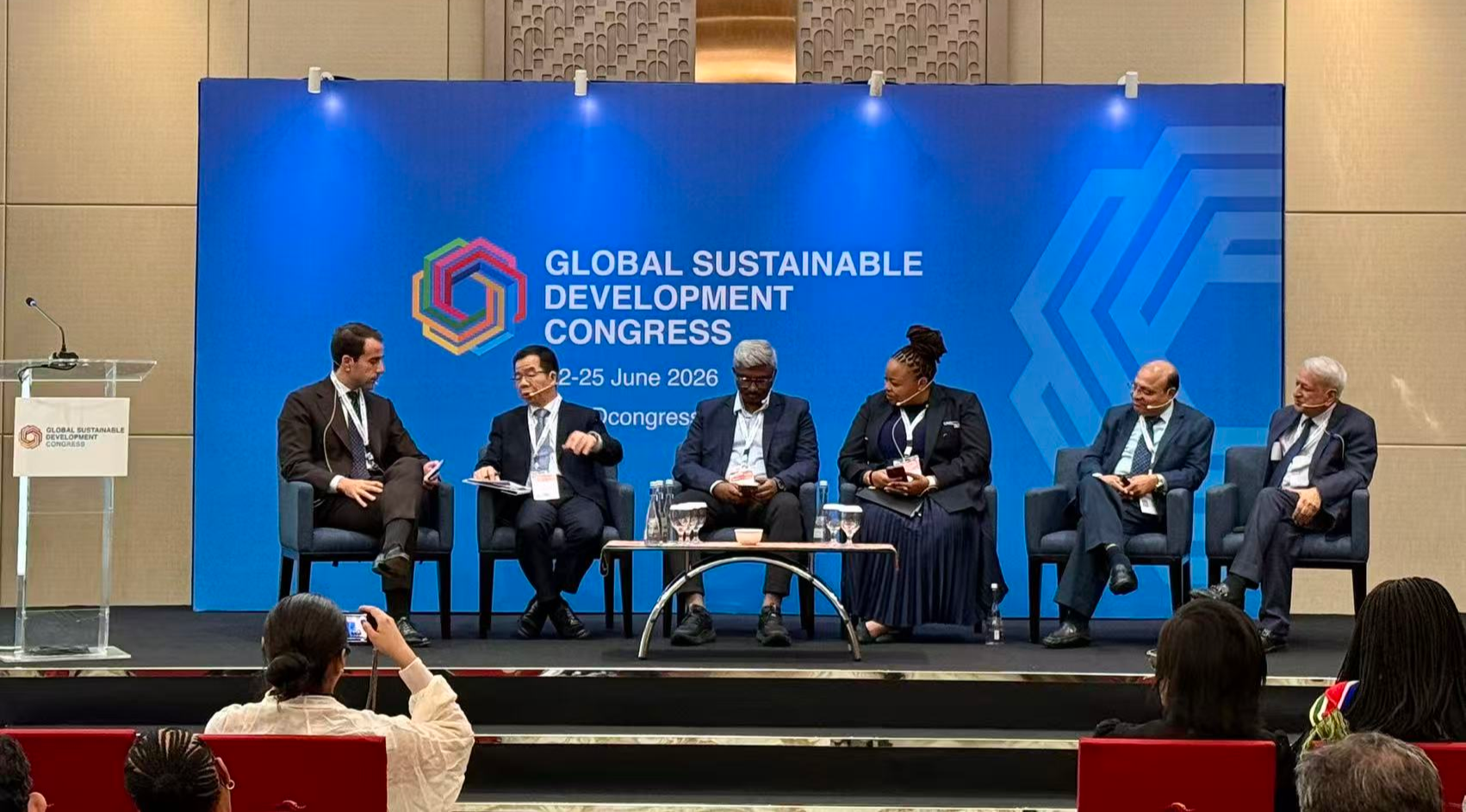
After the report launch, Huang was invited to join the GSDC 2026 thematic roundtable, “Practical Pathways for Implementing AI Governance in Higher Education.” Together with representatives from universities and international organizations, he discussed urgent challenges in global AI governance, cross-border regulatory coordination and practical implementation at the institutional level. Drawing on findings from the 100-university study, he shared a systematic approach to governance.
Long-Term International Research Supports the United Nations Sustainable Development Goals
The Global Sustainable Development Congress is hosted by THE, and the 2026 congress marked its fifth edition. It took place from June 22 to 25 at the Indonesia Convention Exhibition in Jakarta under the theme “Collective Action for a Sustainable Future,” bringing together more than 5,000 global changemakers from over 120 countries and regions.
The report released at the congress is a major research output under the United Nations International Decade of Sciences for Sustainable Development (IDSSD, 2024-2033). It was completed over two years through the Intelligent Social Experiment project of the UNESCO Chair on Artificial Intelligence in Education and reflects the Chair team’s sustained international academic exchange and contribution to global education governance. Going forward, the UNESCO Chair will continue to serve as a bridge for international collaboration by building a global network for sharing AI innovation practices in higher education, deepening its longitudinal study of AI-enabled transformation across the 100 universities, and making institutional exchanges, joint research and international training a regular part of cooperation between Chinese and international universities. These efforts will provide sustained research support for advancing United Nations Sustainable Development Goal 4 (SDG 4): Quality Education.